A study visa in USA is an F-1 (academic student) or M-1 (vocational student) visa, which a US embassy or consulate issues after a school accepts the applicant and a consular officer approves the interview. Universities, colleges, high schools and language programs fall under the F-1, while trade and technical schools fall under the M-1. Rules changed repeatedly between June 2025 and September 2026, and some online guides still describe a policy that a federal court blocked on September 14, 2026. Fees, interview rules and policy dates below were checked against State Department pages, university international offices and immigration law firms. General information here does not replace advice from a school’s Designated School Official (DSO) or an immigration attorney.
What Is a Study Visa in USA, and Which Type Do You Need?
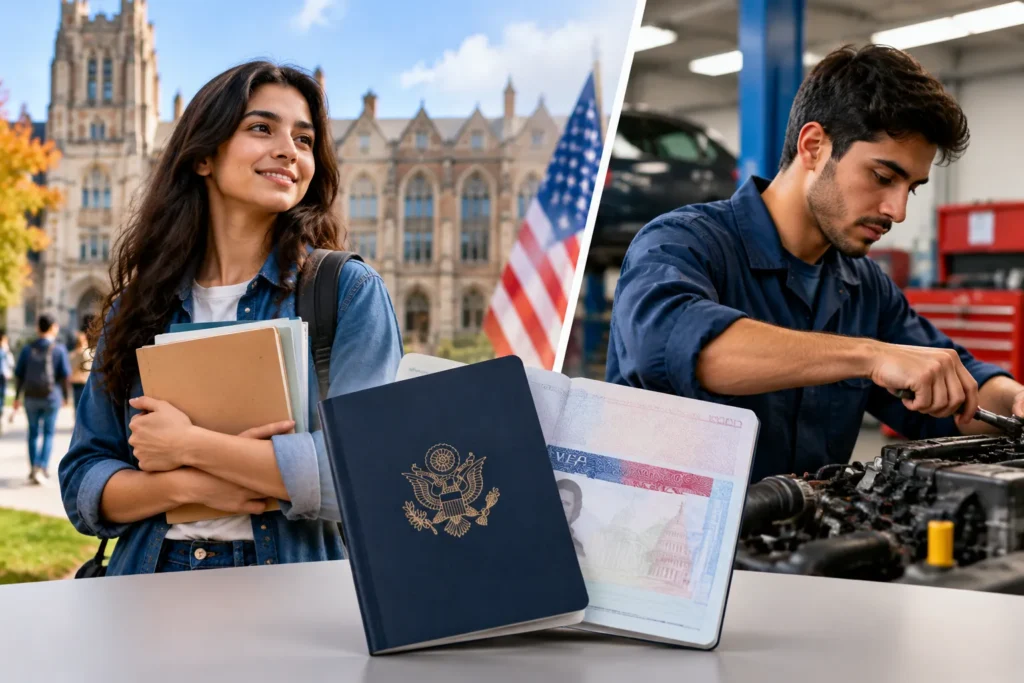
The F-1 visa covers academic study, and the M-1 visa covers vocational study. The type of school, not the student’s nationality, decides the category.
| Visa | Study it covers | Example |
| F-1 | University, college, high school, private elementary school, seminary, conservatory, language program | A two-year master’s degree in data science |
| M-1 | Vocational or other nonacademic institution | An automotive technician certificate |
| B-1/B-2 (visitor) | Recreational, non-credit study during a visit | A one-week cooking workshop |
| J-1 (exchange visitor) | Exchange programs, a separate visa category | A university research exchange |
A visitor visa never covers credit-bearing study, even for a short course. Even a brief campus residency inside a distance learning program requires an F visa before arrival. Canadian and Bermudian citizens generally don’t need a visa, but they must present a valid Form I-20 at admission.
What Do You Need Before Applying for a Study Visa in USA?
Every F-1 and M-1 applicant must meet six federal criteria, starting with acceptance at a school approved by the Student and Exchange Visitor Program (SEVP). U.S. Citizenship and Immigration Services (USCIS) requires:
- Enrollment in an academic, language-training or vocational program
- Approval of the school by SEVP
- Full-time student status
- English proficiency, or enrollment in courses that build it
- Sufficient funds for self-support during the entire course of study
- A residence abroad that the student has no intention of giving up
After acceptance, the school registers the student in the Student and Exchange Visitor Information System (SEVIS) and issues a Form I-20. Passports must stay valid at least 6 months (about 180 days) beyond the period of stay, unless a country-specific agreement exempts the applicant. Funding evidence usually means bank statements, scholarship letters or sponsor documents that show how the student will pay tuition, living costs and travel.
How Do You Apply for a Study Visa in USA, Step by Step?
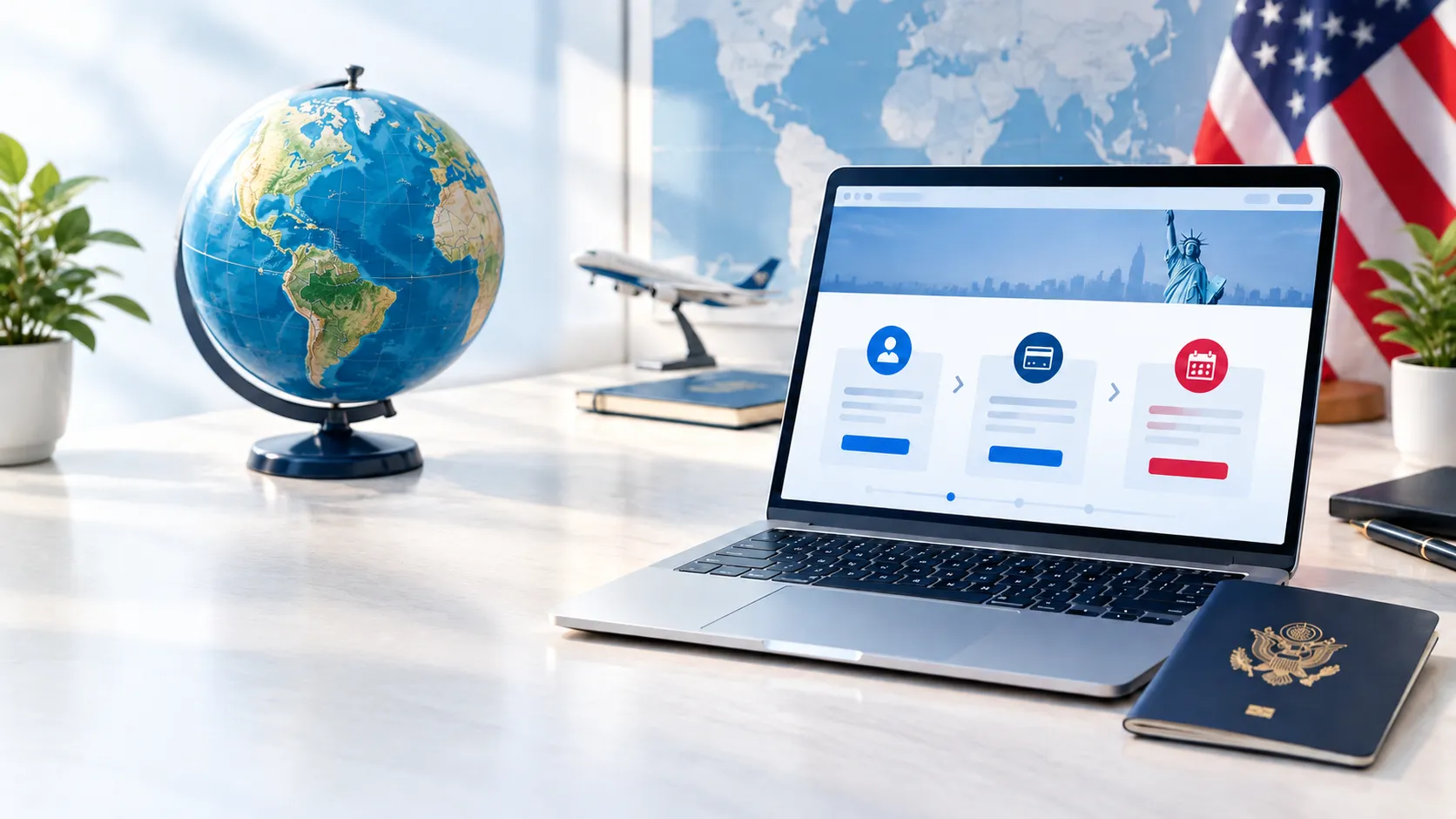
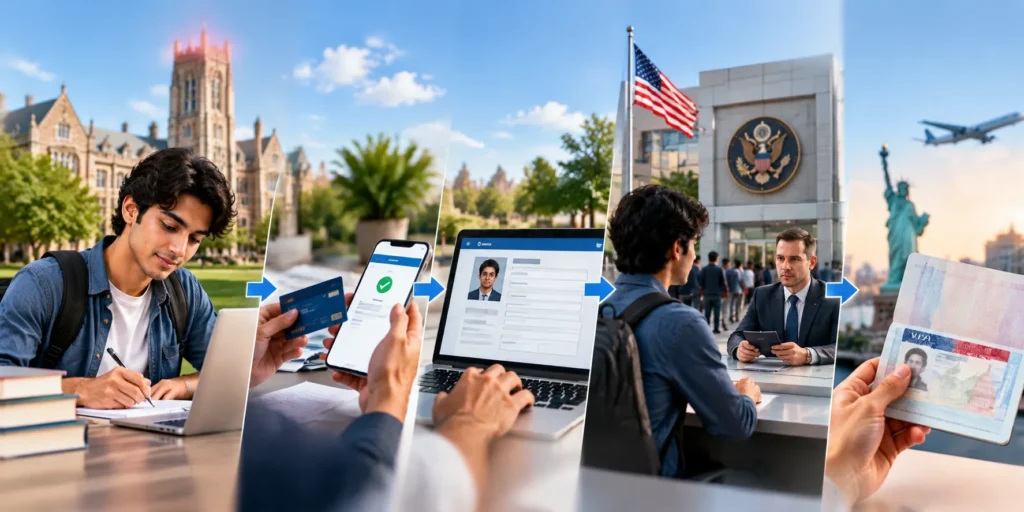
Apply in seven steps: accept an offer, pay the SEVIS fee, complete the DS-160, pay the visa fee, book the interview, gather documents and attend the interview. Embassies can change the order, so read the instructions on the website of the embassy or consulate where you will apply.
- Accept an offer. Apply to a school certified by SEVP; the Department of Homeland Security (DHS) school search tool lists them. The school enters your record into SEVIS and issues Form I-20.
- Pay the SEVIS fee. The Form I-901 fee is $350, and the receipt goes in your interview folder.
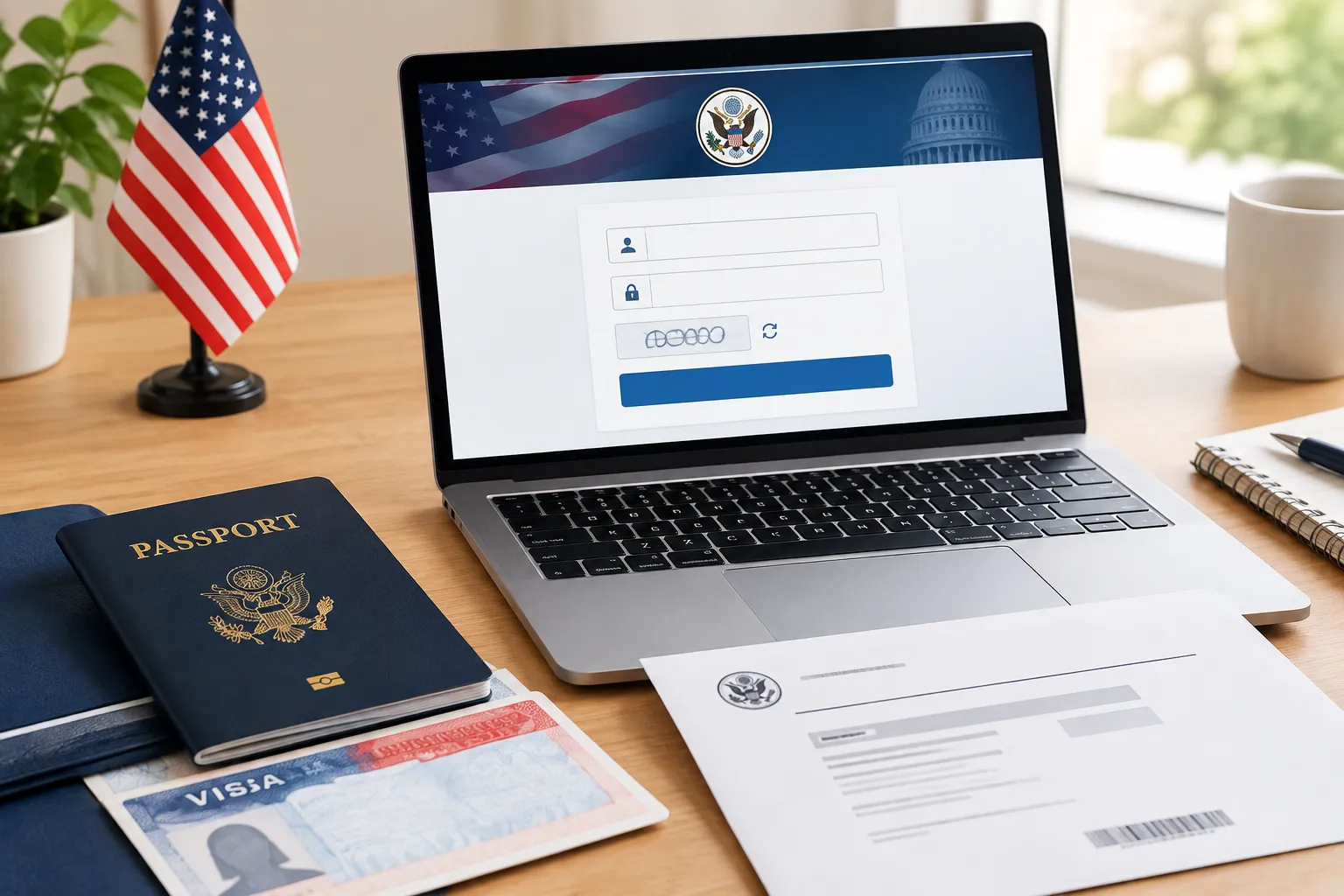
- Complete the DS-160. The Online Nonimmigrant Visa Application (DS-160) includes a photo upload that must meet State Department rules, and the confirmation page needs printing afterward.
- Pay the visa fee. The application fee is $185 and is non-refundable.
- Book the interview. Schedule it at the embassy or consulate in the country where you live or hold citizenship. Consulates issue visas up to 365 days (about 12 months) before the program start date, but entry is permitted only 30 days before it.
- Gather documents. Bring the passport, DS-160 confirmation page, fee receipt and Form I-20 signed by you and a school official. Officers can also request transcripts, test scores and proof of funds.
- Attend the interview. A consular officer decides eligibility, and digital fingerprint scans are usually taken the same day. Some cases move to administrative processing, which adds waiting time.
Wait times vary by city, season and visa category. The State Department publishes current figures for each embassy, so check the number before choosing a program start date.
What Changed for Study Visa Applicants in 2026?
Four rules changed most: in-person interviews, social media review, home-country interview locations and a postponed limit on how long students may stay.
Do All F-1 Applicants Need an In-Person Interview?
Yes, nearly all F-1 applicants must attend an in-person interview, including students renewing a visa in the same category. The requirement took effect October 1, 2025. Interview waivers that once let repeat applicants skip the appointment have largely ended, and appointment wait times have grown as a result.
What Does the Social Media Review Require?
Applicants must list their social media identifiers on the DS-160 and set those profiles to public. The State Department directive dates to June 2025. The form asks for every handle used over the previous five years. Mismatches between profiles and paperwork invite questions; a LinkedIn page that lists a different graduation year than the DS-160 is one example. Applicants shouldn’t delete accounts or build a cleaner online identity to mislead an officer.
Where Must You Attend the Visa Interview?
Attend the interview at the US embassy or consulate in the country where you hold citizenship or live. The State Department announced the guidance on September 6, 2025. Applicants must be able to demonstrate residence in the country where they apply, and utility bills, lease agreements or bank statements serve as evidence. Fees paid for an appointment outside the home country are not refunded or transferred.
Is the Duration of Status Rule Changing for F-1 Students?
No. A federal court blocked the rule on September 14, 2026, so F-1 students are still admitted for duration of status. DHS published the final rule on July 17, 2026, replacing open-ended stays with fixed admission periods of no more than four years, effective September 15. The US District Court for the District of Massachusetts issued a preliminary injunction, and a status conference is scheduled for October 2, 2026. An appeal is expected. Check with your DSO before making filing or travel decisions.
How Do You Pass the Study Visa Interview?
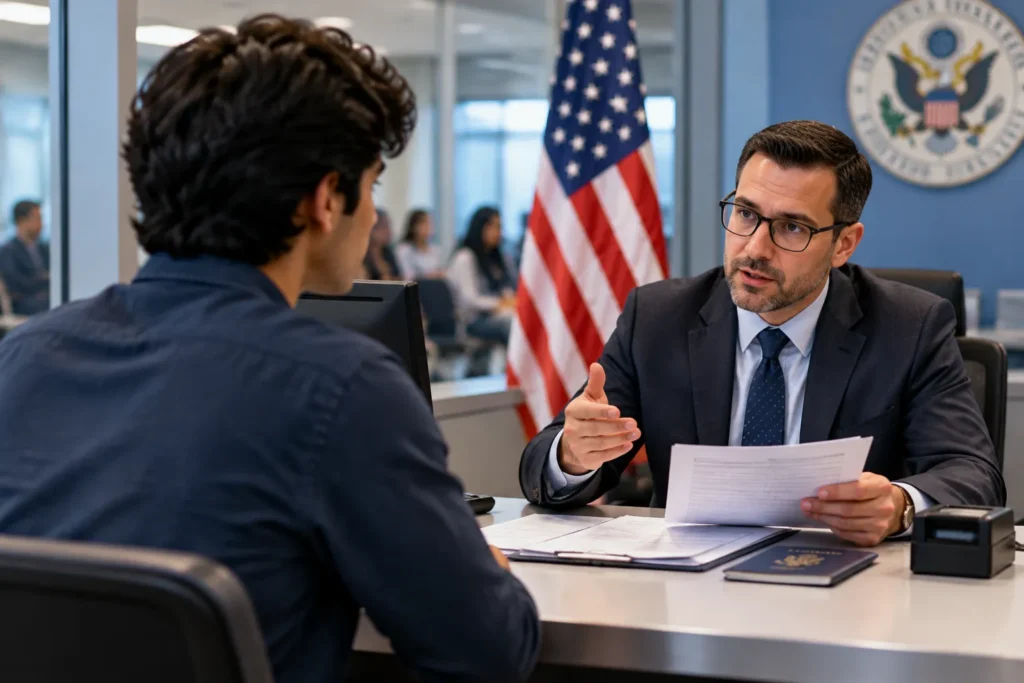
Convince the consular officer of three facts: you are a genuine student, you can pay for your studies without unauthorized work, and you will leave the United States after graduating. Officers evaluate exactly those three areas.
Questions focus on school choice and career plans, such as “Why did you choose this university?” and “How does this degree connect to your plans at home?” Answers work best when they’re short, specific and consistent with the DS-160. A student can state the annual tuition, name the sponsor and hand over the matching bank statement. Ties to the home country include family, a job offer or property.
Section 214(b) of the Immigration and Nationality Act (INA) is the usual refusal ground, because the law requires applicants to show they intend to leave after their studies. Applicants may reapply with additional evidence if their circumstances have changed. Willful misrepresentation, by contrast, can lead to permanent refusal.
Can You Work on a Study Visa in USA?
Yes, F-1 students can work through four authorized routes: on-campus jobs, Curricular Practical Training (CPT), Optional Practical Training (OPT) and a STEM OPT extension. Off-campus work is not allowed during the first academic year.
- On-campus employment: up to 20 hours per week while school is in session, with no USCIS approval needed
- CPT: An internship or cooperative program tied to the curriculum, authorized by the DSO on the Form I-20
- OPT: Up to 12 months of work authorization, which starts only after USCIS approves Form I-765 and issues the Employment Authorization Document (EAD)
- STEM OPT extension: an additional 24 months for eligible Science, Technology, Engineering and Mathematics (STEM) degrees
Full-time CPT deserves care. Twelve months or more of full-time CPT ends OPT eligibility, so a computer science student who completes a full year of full-time internships loses post-graduation OPT.
What Happens After Approval, and How Long Can You Stay?
A visa only lets you request entry, and a Customs and Border Protection (CBP) officer decides at the port of entry whether to admit you. The officer issues an admission stamp or a paper Form I-94 arrival record.
Entry is allowed no earlier than 30 days before the program start date. A student whose program starts August 25 can’t arrive before July 26, and an earlier arrival requires a separate visitor visa. After the program ends, F-1 students must leave within 60 days (about 2 months), including any authorized practical training. Staying longer puts the student out of status and voids the visa under Section 222(g) of the INA.
Family members follow a parallel path. A spouse and unmarried minor children apply for F-2 visas, and each needs an individual Form I-20 from the school. No SEVIS fee applies to them.
What Mistakes Delay or Sink a Study Visa in USA Application?
Five mistakes cause most avoidable problems: booking outside the home country, submitting inconsistent details, showing thin funding evidence, buying flights early and entering too soon.
- Booking in a third country: fees are non-refundable, and qualifying for the visa becomes harder
- Submitting inconsistent details: the DS-160, Form I-20, résumé and public profiles must tell the same story
- Showing thin funding evidence: one bank statement covering a single semester falls short when the program lasts four years
- Buying flights before approval: the State Department advises against final travel plans or tickets until the visa is in hand
- Entering too soon: arriving more than 30 days early requires a visitor visa and a USCIS change of status before classes begin
How Much Does a Study Visa in USA Cost in 2026?
Government fees total $535 (a $350 SEVIS fee plus a $185 visa application fee), and the $250 Visa Integrity Fee raises the total to $785 at consulates that collect it.
| Fee | Amount | When you pay |
| SEVIS I-901 fee | $350 | Before the interview |
| Visa application fee | $185 | Before the interview, non-refundable |
| Visa Integrity Fee | $250 minimum | At visa issuance, after approval |
| Total | $535 to $785 |
Congress enacted the Visa Integrity Fee in July 2025 under Public Law 119-21, and it is collected at issuance once a visa is approved, so denied applicants don’t pay it. Boston University’s international office reported on May 19, 2026 that some consular posts had started charging it, while a June 2026 review found the rollout uneven across consulates. Confirm the current practice with your embassy before the appointment. The amount adjusts annually for inflation, and a nationality-based issuance fee can add to the bill.
Two students show the spread. An applicant at a consulate that collects all three fees pays $785, while an applicant at a post that hasn’t started collecting pays $535.
FAQs
Can you study in the US on a tourist visa?
No. Visitor (B) visas cover only short recreational, non-credit study. Any course that leads to a US degree or certificate requires an F or M student visa first.
How early can you apply for a study visa in USA?
Apply as soon as the school issues your Form I-20. Consulates issue student visas up to 365 days (about 12 months) before the program start date.
Does the Visa Integrity Fee apply to students?
Yes. The $250 fee applies to F-1 applicants and is paid only after approval. Collection differs by consulate, so confirm your embassy’s practice before the appointment.
Can family members join an F-1 student?
Yes. A spouse and unmarried minor children can apply for F-2 visas, and each needs an individual Form I-20 from the school. No SEVIS fee is charged for them.
What happens after a visa refusal?
Applicants may reapply with additional evidence or changed circumstances. Stronger funding documents or updated proof of home-country ties give a new application its best chance.
Is the duration of the status rule in effect?
No. A federal court blocked it on September 14, 2026, and F-1 students remain admitted for duration of status while the lawsuit continues.
How long can graduates stay in the US?
F-1 students must leave within 60 days (about 2 months) of the program end date on the Form I-20, including any authorized practical training.
Conclusion
A study visa in USA begins with one document: the Form I-20 from an SEVP-certified school. Once the I-20 arrives, pay the $350 SEVIS fee, complete the DS-160 and book the interview in your country of nationality or residence. Budget $535 in government fees, plus $250 if your consulate collects the Visa Integrity Fee. Consulates can issue the visa up to 365 days before the program starts, and CBP admits you no earlier than 30 days before it.