A study visa in Canada is a study permit, a document that Immigration, Refugees and Citizenship Canada (IRCC) issues to international students who attend a designated learning institution (DLI). Programs longer than six months require one. The rules for funds, attestation letters, and school changes shifted each year between 2024 and 2026, and guides published before September 2026 now list outdated numbers. Every figure below reflects the rules in force on October 3, 2026, including the living-cost increase that took effect on September 1.
What Is a Study Visa in Canada?
Canada does not issue a separate student visa; the document that authorizes study is the study permit.
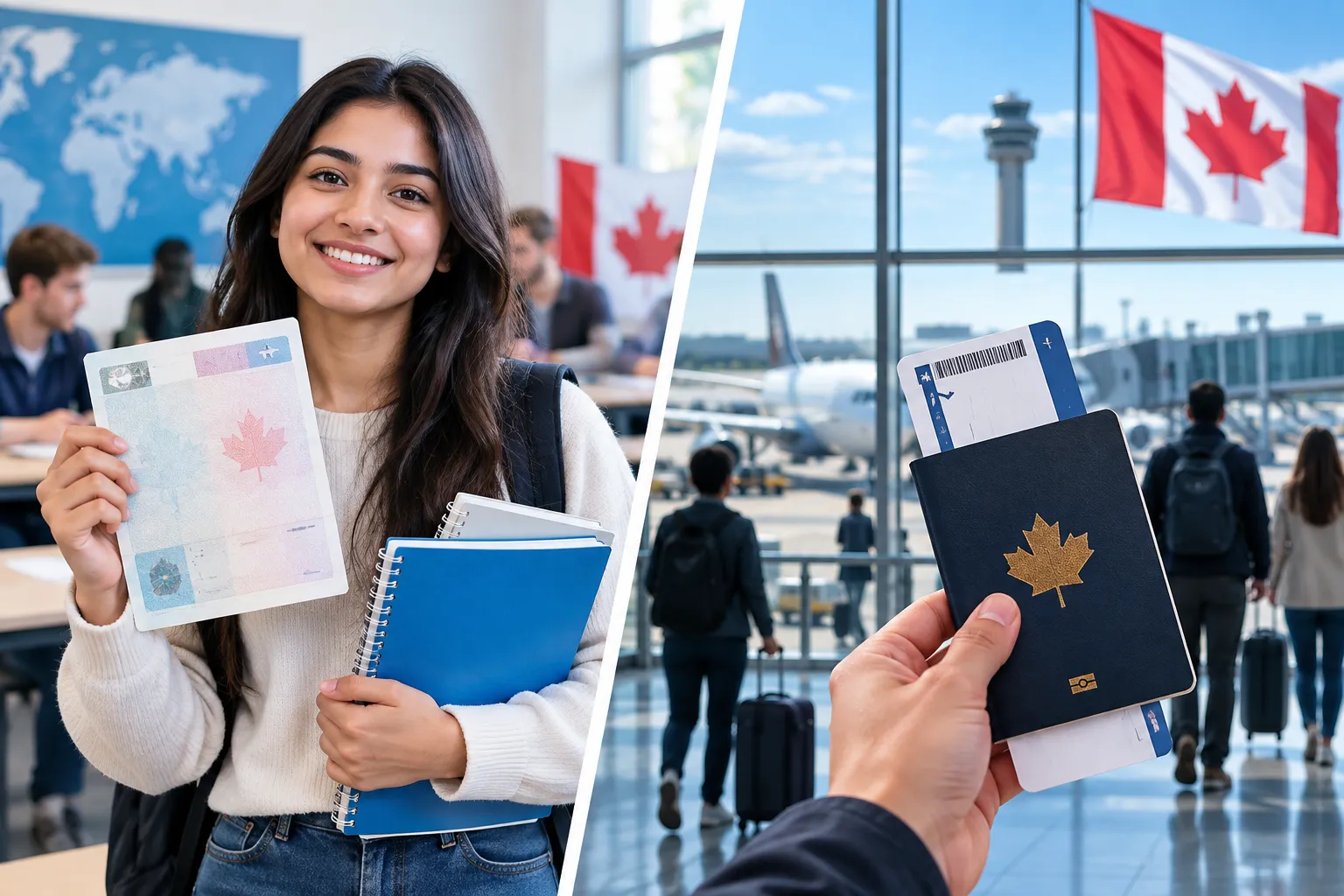
The permit authorizes study, while a travel document authorizes entry. Depending on nationality, a student needs a temporary resident visa (TRV) or an electronic travel authorization (eTA) for that purpose. A student from India needs a TRV, for example, and a student from France needs an eTA. IRCC reviews the application for the correct travel document automatically, so applicants file no separate request. At the port of entry, a border services officer checks the letter of introduction and issues the physical permit.
Who Needs a Study Permit to Study in Canada?
International students enrolled in a program longer than six months need a study permit.
Courses of six months or less, such as a three-month English program, don’t require a permit, and the student can enter as a visitor. If a student expects to continue past six months, applying before travel avoids a gap later. IRCC’s online eligibility tool settles the question with a short questionnaire. Students planning a study visa in Canada for a degree, diploma, or certificate program must apply before traveling.
What Documents Does a Canada Study Permit Application Require?
A Canada study permit application requires a valid passport, a letter of acceptance from a DLI, proof of funds, and a provincial attestation letter (PAL) or territorial attestation letter (TAL) unless an exemption applies.
The standard package contains five items:
- A passport or travel document that stays valid through the permit period
- A letter of acceptance from a DLI
- A PAL or TAL, unless an exemption applies
- Proof of funds for tuition, living costs, and travel
- A letter of explanation that states the study plan
Officers may request four more items:
- Biometrics (fingerprints and a photo)
- A medical exam certificate, required for stays over six months or after time spent in certain countries
- A police certificate
- Extra documents specified by the local visa office
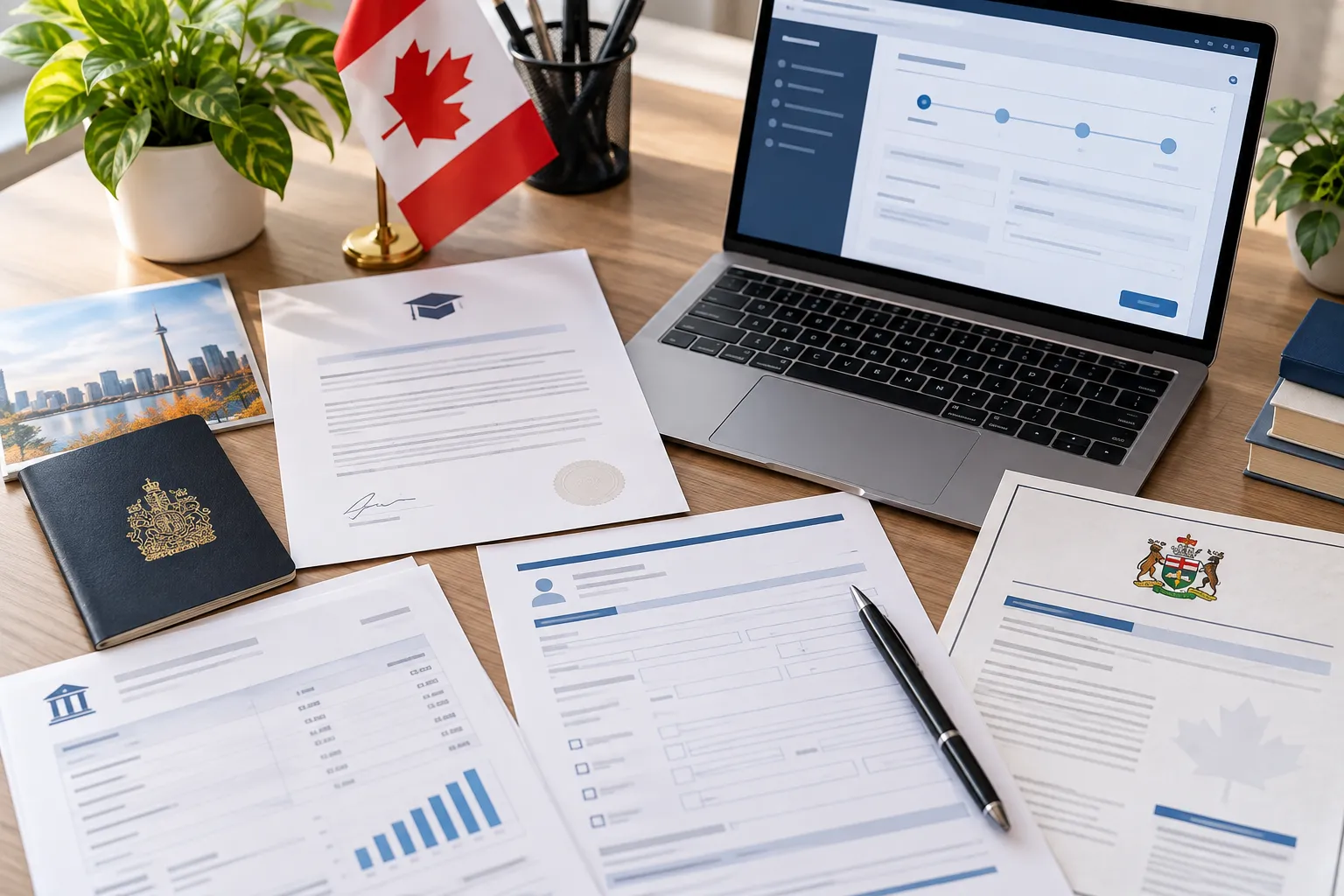
The letter of explanation matters because IRCC treats a study permit as an immigration application, not a school application. Officers judge whether the study plan is genuine and credible. A business graduate who applies for a nursing diploma, for example, should explain the career change in plain terms. Missing items delay or return a file, and a complete file still doesn’t guarantee approval.
What Does a Canada Study Permit Cost?
The study permit application fee is CAD 150 (about US108),andbiometricscostCAD85(aboutUS61) per person.
Applicants whose biometrics remain valid from an earlier application may not pay the second fee, and IRCC’s validity checker confirms the status. Visa application centres (VACs) charge a separate service fee in some countries. VFS Global, for instance, charges INR 1,000 to INR 2,000 in India. Payment happens online during submission.
What Is a PAL or TAL, and Which Students Still Need One?
Students applying to most college and undergraduate programs in 2026 still need a PAL or TAL.
A PAL or TAL is a letter from a province or territory that confirms a space for the student under Canada’s international student cap. Master’s and doctoral students at public DLIs have been exempt since January 1, 2026. K–12 students, certain priority groups, and current permit holders extending at the same DLI and the same level of study are exempt as well.
IRCC expects to issue up to 408,000 study permits in 2026: 155,000 to new arrivals and 253,000 as extensions. Of that total, 180,000 permits go to students who need a PAL or TAL, and IRCC will accept 309,670 applications from that group. Ontario receives 104,780 application spaces, Quebec 93,069, and British Columbia 32,596. Schools differ on timing, and an Expatica tip notes that a school may issue the letter only after the student pays a deposit, so plan extra weeks before submitting.
How Do You Apply for a Canada Study Permit?
Apply online through an IRCC account after receiving a letter of acceptance and, if the program requires one, a PAL or TAL.
Follow these nine steps in order:
- Choose a DLI from IRCC’s official list.
- Accept the offer and pay the deposit the school requires.
- Obtain a PAL or TAL, if the program requires one.
- Gather the documents listed above.
- Create an IRCC account or sign in.
- Complete the application with the personalized checklist.
- Pay the CAD 150 permit fee and the CAD 85 biometrics fee.
- Submit the application and keep copies of every file.
- Give biometrics as soon as the instruction letter arrives.
Older guides still describe the Student Direct Stream (SDS), which offered 20-day processing to applicants from 14 countries. IRCC ended the SDS on November 8, 2024, so every applicant now uses the regular stream.
How Much Money Do You Need for a Study Visa in Canada?
A single applicant studying outside Quebec must show CAD 23,448 (about US$16,900) in living-cost funds, plus first-year tuition and travel costs, on any application submitted on or after September 1, 2026.
IRCC raised the amount by CAD 553 from the previous CAD 22,895, which applied to applications received from January 1, 2025 through August 31, 2026. Applications received before September 1 are assessed under the figure in place on the day of receipt. IRCC sets the amount at 75% of Statistics Canada’s Low Income Cut-Off (LICO) for each family size and revises the figure every year.
Living-cost funds outside Quebec rise with family size:
| Family members (including applicant) | Required funds (CAD) | Approx. USD |
| 1 | 23,448 | 16,900 |
| 2 | 29,192 | 21,000 |
| 3 | 35,888 | 25,800 |
| 4 | 43,572 | 31,400 |
| 5 | 49,419 | 35,600 |
| 6 | 55,736 | 40,100 |
| 7 | 62,054 | 44,700 |
| Each additional member | 6,318 | 4,500 |
USD values use roughly US$0.72 per CAD and move with the exchange rate.
These amounts exclude tuition and airfare. Take a student with CAD 20,000 in first-year tuition and CAD 2,000 in airfare (an illustrative case): that student must document CAD 45,448, or about US$32,700, in total.
IRCC groups acceptable proof into three categories: fees already paid, funds currently available, and expected support. Examples include:
- Proof of paid tuition and housing fees, paired with evidence of funds for living and travel
- Bank statements from the last six months, Canadian or foreign
- A Guaranteed Investment Certificate (GIC) from a Canadian bank
- A bank-issued student or education loan
- A scholarship confirmation
- A letter from a financial supporter, with photo identification and proof of the relationship

Scrutiny increased in July 2026, when IRCC updated officer instructions so that officers assess the source of funds in every case, not only in high-risk ones. A large deposit with no paper trail, such as a cash transfer one week before applying, invites questions. Applicants from countries with foreign exchange controls must show authorization to export the money.
How Long Does Study Permit Processing Take?
Processing time varies by country, and IRCC’s online processing times tool shows the current estimate for each one.
Third-party guides quote averages from six weeks to three months. Those numbers are estimates, not commitments. Incomplete files, pending biometrics, and added checks all extend the wait. A student whose classes start on September 2, for example, should submit the day the PAL arrives and ask the school’s international office about deferral if the file is still pending in August.
Which Extra Approval Applies to Quebec Study Permits?
The Quebec Acceptance Certificate (CAQ), issued by the Quebec government, is required before applying to IRCC.
Quebec sets separate financial rules, last updated on January 1, 2026. A single applicant must show CAD 24,617 (about US$17,700), which is CAD 1,169 above the federal figure. Two applicants need CAD 34,814 and three need CAD 42,638. Tuition and transportation cost extra. Both governments assess the same funds, so applicants submit one set of documents.
Do US Citizens Need a Study Permit for Canada?
Yes, if the program lasts longer than six months.
United States citizens are visa-exempt and don’t need an eTA, but the permit requirement matches the one for every other nationality. A US student starting a four-year bachelor’s degree in Toronto needs a permit. A US student on a ten-week summer course doesn’t. The CAD figures above apply in full, so a US applicant should budget in Canadian dollars and convert at the current rate.
Why Do Study Permit Applications Get Refused?
Study permit applications get refused for insufficient or unexplained funds, incomplete documents, an expired PAL or TAL, or a study plan that an officer finds unconvincing.
A refusal letter states the reasons, and applicants can correct the problem and reapply. A letter that cites funds, for example, calls for stronger evidence, such as six months of bank statements plus a GIC. Judicial review at the Federal Court is the legal challenge route, and an immigration lawyer handles it. Regulated Canadian Immigration Consultants (RCICs), licensed by the College of Immigration and Citizenship Consultants (CICC), and immigration lawyers can review a refusal letter. Hiring one is optional, because IRCC doesn’t require a representative.
What Happens After the Study Permit Is Approved?
What do students carry to the border?
Students carry a passport, the letter of introduction, the letter of acceptance, and evidence of funds. A border services officer makes the final entry decision and issues the permit when every document is in order.
What health coverage do students need?
Coverage depends on the province and the school. Ontario universities, for example, enroll international students in the University Health Insurance Plan (UHIP). The school’s international office confirms the plan before arrival.
Can international students work while studying in Canada?
Yes, students in a full-time program of at least six months can work up to 24 hours per week off campus during academic sessions. Work starts only after the program begins. Scheduled breaks carry no hour limit, provided the student is full-time before and after the break.
Can students change schools on the same permit?
No. Since November 8, 2024, a student who changes schools must apply for a new study permit by extending the current one.
How does a student stay in Canada after graduating?
Eligible graduates apply for a post-graduation work permit (PGWP), which lasts up to three years. The student must graduate from a PGWP-eligible DLI, keep full-time status each semester (part-time is allowed in the final one), and apply within 180 days of finishing. Permanent residence pathways such as the Canadian Experience Class follow for graduates with qualifying work experience.

Frequently Asked Questions
Is a student visa the same as a study permit in Canada?
No. The study permit authorizes study, and a TRV or eTA authorizes entry. IRCC issues the travel document automatically with an approved permit when the applicant’s nationality requires one.
How much do government fees cost in total?
Government fees total CAD 235 (about US$169): CAD 150 for the permit and CAD 85 for biometrics. Visa application centres charge extra service fees in countries such as India.
Does the CAD 23,448 requirement include tuition?
No. The figure covers one year of living costs only. A student with CAD 20,000 in tuition needs CAD 43,448 on paper, plus airfare.
Can a study permit be extended from inside Canada?
Yes. Students submit the extension through an IRCC account before the current permit expires. Applications filed on or after September 1, 2026 face the new CAD 23,448 amount.
Does Canada still have the Student Direct Stream?additional service fees in countries like
No. IRCC closed the Student Direct Stream and Nigeria Student Express on November 8, 2024. Applicants from every country now use the regular study permit stream.
Who is exempt from the PAL or TAL requirement in 2026?
Master’s and doctoral students at public DLIs, K–12 students, and current permit holders extending at the same DLI and level are exempt. Certain priority groups qualify too.
How many hours can students work off campus?
Students can work 24 hours per week during academic sessions and unlimited hours during scheduled breaks. The permit must allow work, and enrolment must be full-time.
How long can a graduate stay on a PGWP?
A PGWP lasts up to three years. Graduates of eligible DLIs must apply within 180 days of finishing their studies and must have studied full-time throughout, except in the final semester.
Conclusion
Check the funds first. Open IRCC’s proof of financial support page for the current amount, then confirm whether the program requires a PAL or TAL, because the letter and the funds set the application timeline. Applications submitted on or after September 1, 2026 need CAD 23,448 in living costs for a single applicant outside Quebec, and Quebec applicants need CAD 24,617.