

Student travel programs are supervised educational trips that build learning through travel itself, and student travel programs do not normally award transferable school or university credit. Parents compare programs by supervision, safeguarding, insurance and operator record before parents compare programs by destination. A family in Ohio, for example, might pick a 9-day history tour of Washington, District of Columbia (DC) and New York for a 15-year-old instead of a semester course abroad.
What Student Travel Programs Are
Student travel programs are organized group trips for students that combine a planned itinerary, trained adult supervision and educational activities outside a classroom. Operators run student travel programs on fixed dates, and schools, parents or individual students enroll a traveler on a named trip. A middle school group touring a marine research station in Florida, for example, follows a set schedule of guided field sessions, meals and evening briefings. Enrollment does not register the student at a foreign school or university, and completion produces a certificate, service record or reflection portfolio rather than a transcript.
Providers sell trips, not terms. The provider controls transport, lodging, activities and staffing under one contract, and the family pays one program fee for the bundled trip. A parent can ask one direct question at that stage: will a school registrar accept this experience for credit? The honest answer for a standard travel program is no, unless a separate credit arrangement is named in writing before payment.
Student Travel Programs vs. Study Abroad: The Credit Line
Study abroad means enrollment in credit-bearing courses at a school, college or university, and a travel program means participation in a supervised trip without that enrollment. Credit is the dividing line, and every other difference flows from credit. Study abroad students attend classes, complete assessments and receive grades that a home institution may transfer. Travel program participants visit sites, join workshops and complete service or adventure activities that no registrar grades. The table below sets the two models side by side.
| Feature | Student Travel Programs | Credit-Bearing Study Programs |
|---|---|---|
| Primary purpose | Learning through travel, service, language practice and guided visits | Coursework that earns academic credit |
| Enrollment | Booking on a trip with an operator or school group | Admission or registration at a host institution |
| Credit and transcript | No transferable credit as standard; certificate or service hours only | Grades and a transcript for transfer review |
| Typical length | 4 days to 4 weeks; gap-year travel runs 4 to 12 weeks | One term, one semester or one academic year |
| Supervision | Continuous group supervision by teachers, chaperones or program leaders | Institution support with independent daily living |
| Housing | Hotels, hostels, camps or host families arranged for the group | Residences, apartments or homestays arranged for the term |
| Cost structure | One bundled trip fee; international airfare often separate | Tuition plus housing, fees and living costs |
Exceptions exist at the edges of the market. Some operators partner with an accredited school so students complete an optional online course alongside a trip, and that course, not the trip, carries the credit. Parents should request the name of the credit-granting institution and written transfer terms before payment. A student in Texas, for example, earned service hours on a Costa Rica trip and no science credit, because the high school had approved service recognition only.

The Main Types of Student Travel Programs
Five main types cover the market: school trips, language travel, volunteer travel, adventure travel and gap-year travel. The sections below describe each type, its typical format and the student each type fits.
School Trips and Educational Tours
School trips and educational tours are teacher-led group trips that connect museum, historic site and field visits to subjects students already study. Schools approve the itinerary, teachers travel as chaperones, and students travel with classmates on fixed dates. Tours run 4 to 14 days for most international itineraries and 3 to 6 days for most domestic itineraries. A history class visiting the Smithsonian museums and the United States Capitol in Washington, DC, for example, follows teacher-set questions at each stop.
Language Travel Programs
Language travel programs combine short language lessons with daily life in a place where residents speak the target language. Providers schedule morning classes or conversation sessions and fill afternoons with market visits, host family meals and guided cultural activities. Programs run 1 to 8 weeks. A 16-year-old from Colorado studying Spanish in Costa Rica, for example, might attend 15 hours of lessons in one week and practice Spanish at a homestay dinner each night. Language travel builds fluency and confidence, and language travel does not by itself produce a graded language qualification.
Volunteer and Service Travel Programs
Volunteer and service travel programs place students on supervised community projects that a local partner organization has defined. Projects include beach conservation, school support, wildlife monitoring and community building work. Reputable operators publish expected service hours before booking, and published ranges in 2026 run from 12 to 60 hours depending on trip length. One 8-day service trip in the Dominican Republic, for example, lists 15 service hours inside an 8-day itinerary. Ethical operators state that students support locally led work rather than replace paid local workers.
Adventure and Outdoor Travel Programs
Adventure travel programs use hiking, paddling, snorkeling, cycling or field research as the teaching setting under qualified activity instructors. Operators grade activities by age and fitness, supply safety equipment and set ratios for higher-risk sessions such as whitewater rafting. A group of students monitoring sea turtles on a Greek island for 9 days, for example, pairs night fieldwork with marine biology briefings. Parents should check instructor certification for each named activity rather than accept a general promise of experienced staff.
Gap-Year Travel Programs
Gap-year travel programs are longer multi-country or multi-theme trips for students traveling between high school graduation and university entry. Structured gap-year travel runs 4 to 12 weeks and links segments such as language study, service, trekking and cultural stays under one operator. Participants are usually 17 to 19 years old, and supervision is present but less constant than supervision on a teen tour. A graduate from Oregon on a 10-week program, for example, might spend 3 weeks on service in Peru, 3 weeks on language study and 4 weeks traveling with the group. A gap-year travel program is not a gap-year degree course, and universities treat the experience as personal development rather than completed study.
How Long Programs Last and What Programs Cost
Most student travel programs last 4 to 21 days, and published 2026 prices for supervised teen programs start at $1,995 for an 8-day trip before international airfare. Price rises with distance, trip length and activity cost, and families should compare total cost rather than headline price. One large United States operator, Rustic Pathways, publishes 2026 program prices from $1,995 to $13,680 for trips of 8 to 30 days, with lodging, meals, activities and in-country transport included and international airfare excluded. School-led tour prices usually cover flights, hotels, some meals, entrance fees and a full-time tour director. A 4-day Washington, DC, school tour, for example, costs far less per student than a 14-day multi-country European tour at $6,490 plus airfare.
Hidden costs decide the real budget. Families should add international airfare, travel insurance, passport fees, some meals, tips and spending money to the program fee. Payment plans spread the fee across monthly installments for many operators, and fundraising support exists for school groups. Written inclusions matter more than sales language: a safe comparison lists every cost item for 3 shortlisted programs in the same format before a deposit is paid.
Supervision, Safeguarding and Safety Standards
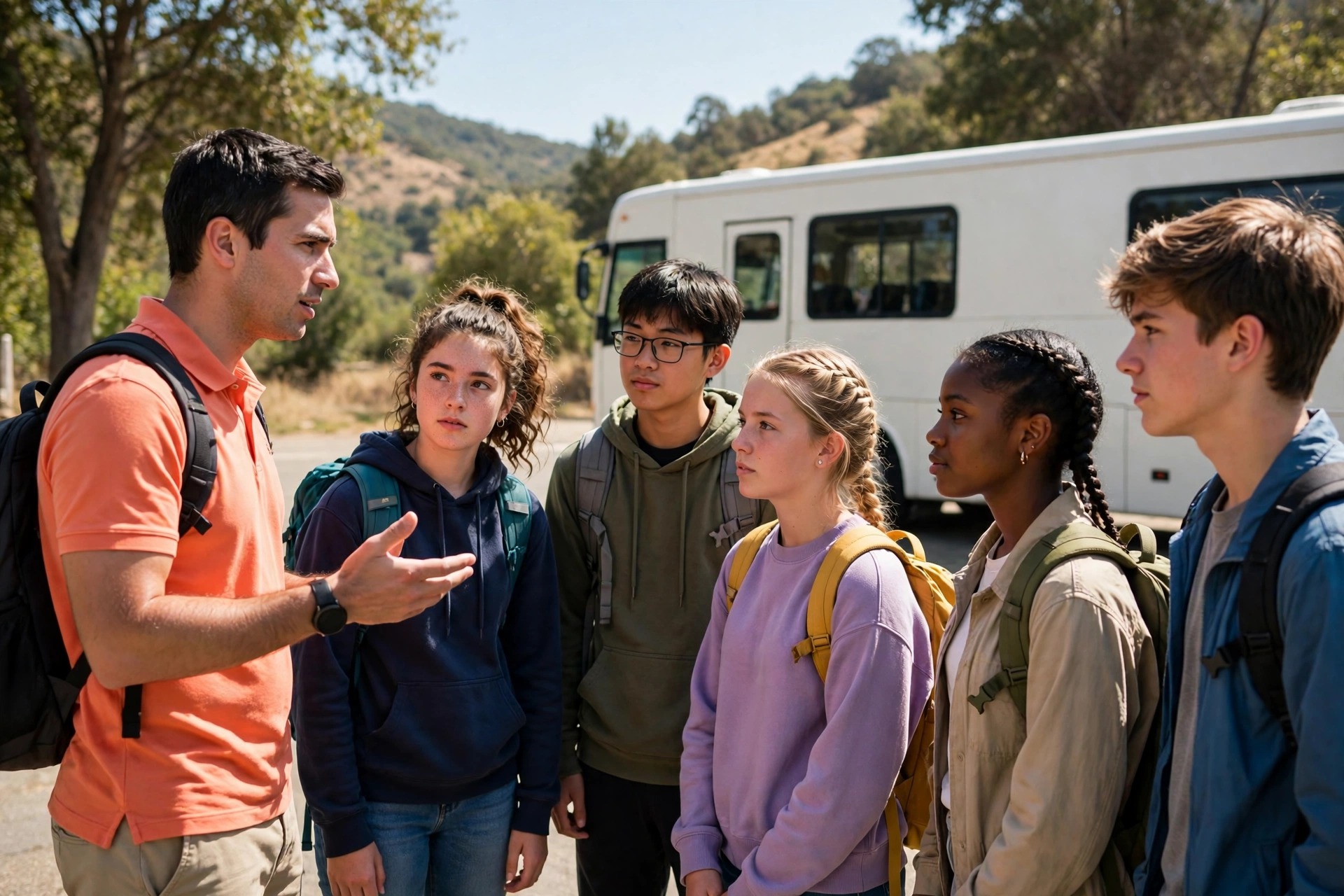
Safe student travel programs provide named adult supervision at all times, vetted staff, written safeguarding rules and a 24-hour emergency response system. Supervision models differ by age group. School tours travel with teachers and a tour director, open-enrollment teen programs travel with trained program leaders, and gap-year programs use regional staff with scheduled check-ins. Parents should ask for the staff-to-student ratio in writing. Published teen programs average groups of about 15 students, and one major operator reports a median ratio of 1 staff member for every 4.37 students across summer programs.
Industry standards give families an external check. The Student and Youth Travel Association (SYTA) is the nonprofit trade association for student and youth travel, and SYTA runs the Center for Student Travel Safety (CSTS). Operators can earn Certified Student Travel Organization (CSTO) status by meeting or exceeding a minimum of 25 safety standards set by SYTA and the center. Certification covers risk assessment, emergency response, staff screening and crisis communication. United Kingdom school-trip specialists point to a parallel set of marks: membership of the Association of British Travel Agents (ABTA), Air Travel Organiser’s Licence (ATOL) protection for flights, membership of the School Travel Forum and the Learning Outside the Classroom (LOtC) Quality Badge. A school group from Manchester traveling with an assured School Travel Forum member, for example, receives audited safety management as part of that membership.
Safeguarding is the child-protection layer inside safety. Strong operators publish rules on staff background checks, one-to-one contact, rooming, photography, phone use and reporting concerns. Parents should ask who receives a safeguarding report during the trip and how fast the operator contacts home. Chaperones should hold medical information for every student, and leaders should know the nearest hospital at each stop.
Insurance and Emergency Cover: What to Check
Families need travel insurance that covers medical treatment abroad, medical evacuation, trip cancellation and trip interruption, and a standard school policy rarely covers all four areas. Medical evacuation is the item families underestimate most: an air ambulance transfer can cost more than the trip itself many times over. A student who breaks an ankle on a trek in Peru, for example, needs local treatment, a changed flight and possibly a medical escort, and each item bills separately.
Government registration adds a free safety layer for international trips. The Smart Traveler Enrollment Program (STEP) is a free service of the United States Department of State that registers a trip with the nearest United States embassy or consulate. Enrolled travelers receive safety alerts for the destination, and consular staff can contact the group during a natural disaster, unrest or another emergency. Enrollment does not replace insurance. Parents should also confirm that the operator carries liability insurance and that the operator will share a certificate of insurance on request.

How to Judge a Safe Operator: A Parent Checklist
A safe operator proves safety with documents, certifications and named procedures, and a safe operator never asks parents to rely on testimonials alone. Parents can work through the checklist below in one phone call and one email exchange. Operators who answer every item in writing give families a record to keep.
- Certification: SYTA membership, CSTO status or, for United Kingdom operators, School Travel Forum assured membership and the LOtC Quality Badge
- Financial protection: ATOL or ABTA bonding for United Kingdom sales, or clear refund and consumer protection terms for United States sales
- Staffing: published staff-to-student ratio, background checks for all adults and named training for program leaders
- Safeguarding: a written safeguarding policy that names the reporting route and the designated safeguarding lead
- Risk assessment: destination-specific risk assessments, vetted hotels and transport providers, and a crisis response plan
- Emergency system: a 24-hour contact line, local staff in the destination and a clear parent notification procedure
- Insurance: required or included cover for medical care, evacuation, cancellation and interruption, with limits in writing
- Track record: years operating student trips, references from schools and a clear complaints process
Red flags end a shortlist fast. Vague answers on ratios, pressure to pay in full immediately, no written terms and no named local partner each signal weak systems. A parent in Florida, for example, rejected one operator that refused to share its safeguarding policy and booked with an operator that sent the policy, ratios and insurance certificate within one day.
Who Student Travel Programs Suit Best
Student travel programs suit students aged 12 to 19 who want guided international experience before independent study, and student travel programs suit families who value supervision over academic credit. Middle school students fit short domestic school tours. High school students fit international tours, language travel, service trips and adventure programs of 1 to 4 weeks. Recent graduates fit structured gap-year travel of 4 to 12 weeks. College students who need credit for a degree should choose a credit-bearing study program instead, because a travel program will not move degree requirements forward. A 14-year-old taking a first trip without parents, for example, gains confidence from a fully led 8-day program in Costa Rica, and that confidence later supports a semester abroad at age 20.
Readiness matters as much as age. Students who can follow group rules, manage basic self-care and sleep away from home usually thrive on travel programs. Students who need one-to-one medical or behavioral support need a direct conversation with the operator before booking, and some trips cannot provide that support safely.
FAQs
Do student travel programs give college credit?
No. Standard student travel programs give no transferable credit. Students receive certificates or service hours. Credit exists only if a separate accredited course is named in writing before booking.
How long do student travel programs last?
Most programs last 4 to 21 days. School tours often run 4 to 14 days, teen service and adventure trips run 8 to 30 days, and gap-year travel runs 4 to 12 weeks.
How much do student travel programs cost in 2026?
Published 2026 teen program prices start at $1,995 for 8 days and reach $13,680 for 30 days with one major operator. International airfare, insurance and spending money usually cost extra.
What supervision do student travel programs provide?
Programs provide continuous adult supervision by teachers, chaperones or trained program leaders. One major operator reports a median ratio of 1 staff member for every 4.37 students on summer programs.
What insurance should a student travel program include?
Cover should include medical treatment abroad, medical evacuation, trip cancellation and trip interruption. Parents should read plan limits in the policy document and confirm operator liability insurance before paying a deposit.
How can parents check if a travel operator is safe?
Parents should verify SYTA membership or CSTO certification, request the safeguarding policy, staffing ratios, risk assessments and insurance certificate, and confirm a 24-hour emergency line and financial protection in writing.
Are student travel programs the same as study abroad?
No. Study abroad means enrolled, credit-bearing coursework at a host institution. Travel programs are supervised trips built around visits, service, language practice or adventure, with no enrollment and no transcript.
Conclusion
Families choose well when families judge student travel programs as supervised educational travel: fixed itineraries, trained leaders, written safeguarding, real insurance and no promise of academic credit. Credit belongs to study programs, and travel programs deliver experience, confidence and global awareness on a trip timetable. An operator either provides the safety documents before booking or the family books with an operator that does.