

About 33 countries grant unconditional birthright citizenship, and nearly all of them sit in the Americas. A child born in the United States, Canada, Mexico, Brazil or Argentina becomes a citizen at birth with no condition placed on the parents. Another group of countries, including Germany, France and Australia, grants citizenship by birth only when a parent meets a residence or status condition. This guide lists what countries have birthright citizenship in 2026, separates the unconditional systems from the conditional ones, and explains the current legal position in the United States after the 2025 executive order challenge.
What Is Birthright Citizenship?
Birthright citizenship is citizenship granted because of the place of birth, a rule lawyers call jus soli, Latin for right of the soil. The opposite rule, jus sanguinis (right of blood), passes citizenship from parent to child regardless of birthplace. Most countries blend the two rules, and the blend decides what a newborn receives.
Unconditional jus soli ignores the parents completely. Conditional jus soli adds a test, and the test usually measures a parent’s legal residence or immigration status. A baby born in Toronto to two visiting tourists is a Canadian citizen from the first day of life, because Canada applies the unconditional form. The same baby born in Sydney to two visiting tourists receives no Australian citizenship, because Australia applies the conditional form.

The Full List of Countries With Birthright Citizenship
The Pew Research Center counted 33 countries with automatic, unconditional jus soli in its March 2026 analysis of the GLOBALCIT Citizenship Law Dataset, which covered 191 countries. Three more countries, Costa Rica, Paraguay and Moldova, grant citizenship to everyone born on their soil once a registration or declaration is filed. Every unconditional system keeps one narrow exception, and the exception covers children of accredited foreign diplomats. Counts from other trackers land between 30 and 36, because trackers classify edge cases such as Chile and Fiji differently.
The table below answers what countries have birthright citizenship in one place. It marks each country as unconditional or conditional and states the key condition.
| Country | Type | Key condition |
|---|---|---|
| Antigua and Barbuda | Unconditional | None, apart from the diplomat exception. |
| Argentina | Unconditional | None, apart from the diplomat exception. |
| Barbados | Unconditional | None, apart from the diplomat exception. |
| Belize | Unconditional | None, apart from the diplomat exception. |
| Benin | Unconditional | None, apart from the diplomat exception. |
| Bolivia | Unconditional | None, apart from the diplomat exception. |
| Brazil | Unconditional | None, except children of parents in Brazil in the service of their home government. |
| Canada | Unconditional | None, apart from the diplomat exception. The rule covers births in Canada after 14 February 1977. |
| Chad | Unconditional | None, apart from the diplomat exception. |
| Costa Rica | Unconditional (by registration) | No parent condition. Registration is required, filed by the parents in childhood or by the person before age 25. |
| Cuba | Unconditional | None, apart from the diplomat exception. |
| Dominica | Unconditional | None, apart from the diplomat exception. |
| Ecuador | Unconditional | None, apart from the diplomat exception. |
| El Salvador | Unconditional | None, apart from the diplomat exception. |
| Grenada | Unconditional | None, apart from the diplomat exception. |
| Guatemala | Unconditional | None, apart from the diplomat exception. |
| Guyana | Unconditional | None, apart from the diplomat exception. |
| Honduras | Unconditional | None, apart from the diplomat exception. |
| Jamaica | Unconditional | None, apart from the diplomat exception. |
| Lesotho | Unconditional | None, apart from the diplomat exception. |
| Mexico | Unconditional | None, apart from the diplomat exception. Article 30 of the constitution sets the rule. |
| Moldova | Unconditional (by registration) | No parent condition. Citizenship is claimed by declaration after birth. |
| Mozambique | Unconditional | None, apart from the diplomat exception. |
| Nicaragua | Unconditional | None, apart from the diplomat exception. |
| Pakistan | Unconditional | None in the statute, apart from children of foreign diplomats and enemy aliens. |
| Panama | Unconditional | None, apart from the diplomat exception. |
| Paraguay | Unconditional (by registration) | No parent condition. Citizenship takes effect through registration. |
| Peru | Unconditional | None, apart from the diplomat exception. |
| Saint Kitts and Nevis | Unconditional | None, apart from the diplomat exception. |
| Saint Lucia | Unconditional | None, apart from the diplomat exception. |
| Saint Vincent and the Grenadines | Unconditional | None, apart from the diplomat exception. |
| Trinidad and Tobago | Unconditional | None, apart from the diplomat exception. |
| Tuvalu | Unconditional | None, apart from the diplomat exception. |
| United States | Unconditional | None, apart from the diplomat exception. The Citizenship Clause of the 14th Amendment sets the rule. |
| Uruguay | Unconditional | None, apart from the diplomat exception. |
| Venezuela | Unconditional | None, apart from the diplomat exception. |
| Australia | Conditional | A parent must be a citizen or permanent resident at the birth. A child who lives in Australia for the first 10 years also qualifies. |
| Chile | Conditional | Children of foreigners in transit are excluded. An excluded child may claim nationality within one year after turning 21. |
| Colombia | Conditional | A parent must be a Colombian citizen or a legal resident at the time of the birth. |
| Dominican Republic | Conditional | Children of foreigners in transit or living in the country without legal status are excluded since 2010. |
| France | Conditional | Citizenship arrives automatically at 18, with residence in France and five years of residence since age 11. A child of a parent born in France is French at birth. |
| Germany | Conditional | A parent needs five years of lawful residence and a permanent right of residence. The rule began in 2000, and the threshold fell from eight years in 2024. |
| India | Conditional | One parent must be a citizen, and the other parent must not be an illegal migrant. The condition has applied since December 2004. |
| Ireland | Conditional | A parent needs three years of reckonable residence in the four years before the birth. The condition replaced the unconditional rule in 2005. |
| New Zealand | Conditional | A parent must be a citizen or hold the right to live in New Zealand indefinitely. The test applies to births from 1 January 2006. |
| Portugal | Conditional | A parent must have held legal residence for at least one year at the time of the birth. |
| South Africa | Conditional | A parent must be a citizen or a permanent resident at the time of the birth. |
| Spain | Conditional | Granted at birth when a parent was born in Spain or the child would otherwise be stateless. Other children born in Spain may claim it after one year of legal residence. |
| United Kingdom | Conditional | A parent must be a citizen or settled in the United Kingdom. The unconditional rule ended on 1 January 1983. |
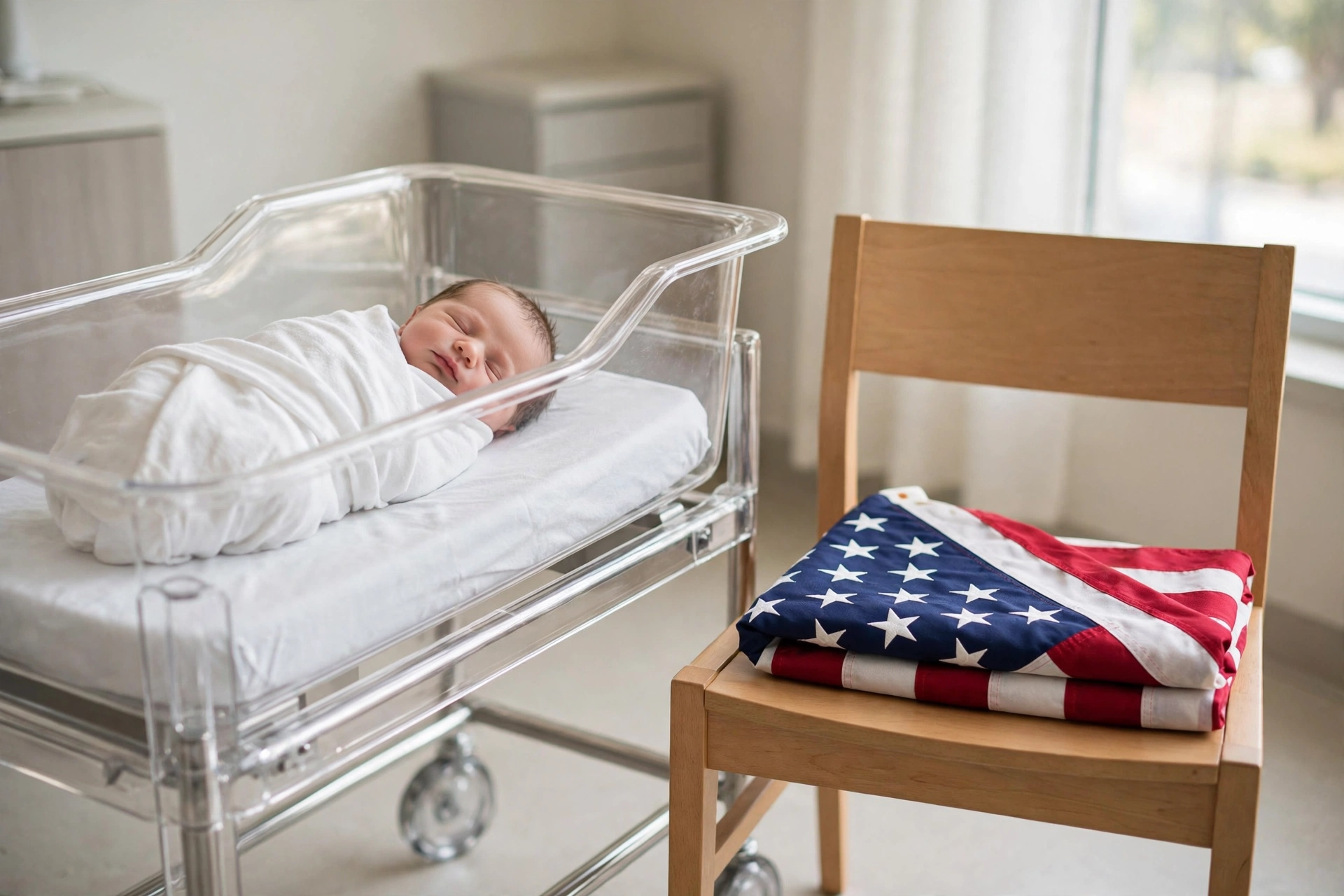
The United States Rule and the 2025 Executive Order Challenge
The Supreme Court of the United States confirmed on 30 June 2026 that children born on United States soil are citizens at birth, whatever status the parents hold. Ratified in 1868, the Citizenship Clause of the 14th Amendment grants citizenship to all persons born in the United States and subject to its jurisdiction. The Supreme Court read that clause broadly in United States v. Wong Kim Ark (1898), a case about a man born in San Francisco to Chinese parents.
President Donald Trump signed Executive Order 14160 on 20 January 2025. The order directed agencies to deny citizenship to babies whose mother was unlawfully present, or lawfully present on a temporary basis, when the father was neither a citizen nor a lawful permanent resident. Federal judges blocked the order within weeks, and the dispute reached the Supreme Court as Trump v. Barbara.
The Court ruled 6 to 3 that the executive order was unconstitutional under the Citizenship Clause and unlawful under the Immigration and Nationality Act (INA). Chief Justice John Roberts wrote for the majority that children of unlawfully or temporarily present parents are subject to the jurisdiction of the United States. A baby born in Houston in 2026 to a mother holding a student visa is therefore a United States citizen from the first day of life.
Two narrower executive orders followed in August 2026, and the orders targeted small categories such as children of foreign government employees. A federal judge in Maryland blocked the core provisions of the August orders on 2 September 2026. That second case continues, and the June 2026 ruling remains the governing position for births in the United States.
Canada and the Americas, Where the Rule Is Broadest
Canada grants citizenship to nearly every child born on Canadian soil, and most countries in the Americas follow the same open pattern. Section 3 of the Canadian Citizenship Act covers every person born in Canada after 14 February 1977. Parliament has rejected proposals to add a parent condition, and the only exception covers children of accredited foreign diplomats and similar foreign officials. Mexico writes the same rule into Article 30 of its constitution, and Argentina has applied its rule since a citizenship law of 1869.
Three countries in the Americas break the pattern. Colombia requires a parent who is a citizen or a legal resident at the birth. The Dominican Republic has excluded children of undocumented residents since a constitutional change in 2010. Chile excludes children of foreigners in transit, and an excluded child may claim Chilean nationality within a year after turning 21. A family that delivers in Bogotá therefore needs a Colombian residence permit in hand, while a family that delivers in Buenos Aires needs nothing at all.
Conditional Rules in Europe, Australia and New Zealand
No European country grants unconditional birthright citizenship today, and Ireland was the last one to end the practice. Irish voters approved a constitutional amendment in 2004, and since 1 January 2005 a child born in Ireland needs a parent with three years of reckonable residence in the previous four years. The United Kingdom ended its automatic rule earlier, on 1 January 1983, and a child born in Britain now needs a parent who is a citizen or settled in the country.
Germany added a conditional rule on 1 January 2000. A child born in Germany to foreign parents receives German citizenship at birth, if one parent has lived lawfully in Germany for five years and holds a permanent right of residence. The five-year threshold dates from a reform on 27 June 2024, which cut the earlier requirement of eight years and removed the old duty to choose one nationality in early adulthood. France delays the grant instead: a child born in France to foreign parents becomes French automatically at 18, provided the child lives in France then and has lived there for five years since turning 11.
Australia and New Zealand apply a parent status test. Australia has required a citizen or permanent resident parent since 20 August 1986, with citizenship also granted to a child who lives in Australia for the first 10 years of life. New Zealand adopted the same parent test for births from 1 January 2006. A baby born in Berlin to parents who hold six years of lawful residence and a settlement permit arrives as a German citizen, while a baby born in Berlin to parents in their first year of residence does not.

What a Birthright Citizenship Does and Does Not Give a Family
Citizenship for the child never transfers immigration status to the parents, and that limit surprises many families. A citizen baby cannot sponsor a parent until adulthood in the United States, where the waiting age is 21. Parents who give birth in a jus soli country usually leave with the same visa status they held on arrival. The child’s own position is strong from day one: the child can live, study and later work in the country of birth without a permit.
Obligations can follow the passport. The United States taxes citizens on worldwide income, so an adult who was born in the United States and never returned may still owe annual tax filings. Brazil requires male citizens to register for military service at 18, including citizens who live abroad. Dual citizenship depends on the parents’ country, because some states withdraw nationality when a child takes another one at birth and others accept both for life. Parents should register the birth with their own consulate as well, since consular registration secures the second citizenship and the documents that prove it.
FAQs
How many countries have birthright citizenship?
About 33 countries grant citizenship automatically to children born on their soil, and more than 40 others attach conditions to the grant. The Pew Research Center published the automatic count in March 2026.
Is birthright citizenship still the law in the United States in 2026?
Yes. The Supreme Court ruled on 30 June 2026 that the 2025 executive order was unconstitutional, so children born in the United States are citizens at birth regardless of the parents’ status.
Do any European countries offer unconditional birthright citizenship?
No. Ireland ended the last unconditional system in Europe after a 2004 referendum. European countries such as Germany and France now attach residence conditions or delay the grant until the child reaches adulthood.
Does a citizen baby give the parents the right to stay?
No. Birthright citizenship belongs to the child alone. Parents keep the immigration status they already held, and a United States citizen cannot petition for a parent until the citizen turns 21.
Can a newborn hold two citizenships at once?
Yes. A child born in a jus soli country to parents from a jus sanguinis country often holds both from birth. Each country sets its own rules on keeping dual citizenship into adulthood.
Does Canada give citizenship to a baby born to visiting tourists?
Yes. Canada grants citizenship to nearly every child born on Canadian soil, including children of tourists and temporary visitors. The exception covers children of accredited foreign diplomats and similar officials.
What is the difference between jus soli and jus sanguinis?
Jus soli grants citizenship by place of birth, while jus sanguinis grants citizenship by parentage. Many countries mix the two, so a child can qualify through the birthplace, through a parent, or through both.
Conclusion
The answer to what countries have birthright citizenship is a short list with a long tail. Around 33 countries, led by the United States, Canada, Mexico, Brazil and Argentina, grant citizenship on birth alone, and a much larger group grants the status only after a parent meets a residence or status test. Rules keep moving: Germany widened its conditional rule in 2024, Ireland and the United Kingdom closed unconditional systems decades ago, and the United States Supreme Court reaffirmed its rule in June 2026. Parents comparing countries should read the condition attached to each name on the list, because the condition decides the case more often than the flag does.










