A US diplomatic passport is a black passport issued to diplomats and certain government officials for official travel abroad, and the public cannot apply for or buy one. It is not a personal travel document, and it does not by itself give diplomatic immunity.
If you are searching for a diplomatic passport, you probably want to know who qualifies, how it is issued, what it allows, whether a family member can hold one, and whether anyone can get it. The answers are strict. A diplomatic passport is tied to a government role, it is issued through an employing agency, and it is returned when the role ends. This guide explains who is eligible, how the process works, what privileges it does and does not bring, how it differs from an official passport, how long it lasts, what family members can receive, and why offers to sell one are scams. The facts come from a LegalClarity article published on 1 April 2026 and updated on 20 May 2026, a second LegalClarity article with no date shown, a PhotoAid page last updated on 8 March 2025 and a Newstrail article dated 17 April 2026. All are secondary sources, not the State Department, and they differ on a few details, which we flag. This is general information and not legal advice. For the passport most travelers use, start with our US passport guide. For cover colors and what each means, read our passport colors guide.
What Is a Diplomatic Passport?
It is a passport issued for diplomatic duties abroad, with a black cover. LegalClarity says a US diplomatic passport is “issued exclusively for government-related travel abroad.”
PhotoAid says the cover is black and reads “Diplomatic Passport United States of America.” The passport is issued by the Special Issuance Agency at the State Department, according to LegalClarity and PhotoAid. A black cover is not always a diplomatic passport, because LegalClarity notes that New Zealand, Angola and a few other countries issue black passports to all citizens, with no special privileges. The table separates the main US types, using the sources.
Our sources do not agree on the official passport color, which our passport colors guide also flags.

Who Is Eligible for a Diplomatic Passport?
Foreign Service Officers and others with diplomatic status who travel abroad for diplomatic duties. LegalClarity says certain contractors may qualify if they meet the requirements and need the passport for their contract.
The second LegalClarity article lists Foreign Service Officers, ambassadors, US representatives to organizations such as the UN and NATO, diplomatic couriers and their immediate family members. PhotoAid lists diplomats and consular officers, high-ranking government officials traveling abroad for official business, and immediate family members accompanying them on official duties. The groups overlap but are not identical, so the exact list depends on the State Department’s rules. Having a relative who holds a diplomatic passport does not make you eligible, says LegalClarity. A private citizen, a tourist, a business owner or a donor does not qualify on their own.
How Do You Apply for a Diplomatic Passport?
There is no public application. Your employing agency decides and starts the request. LegalClarity gives the process.
According to LegalClarity, the agency decides whether your travel qualifies, and the request goes to the Special Issuance Agency. You need proof of US citizenship and a passport photo, and your agency coordinates the submission. PhotoAid adds that you need an authorization from your employing department, which varies by employer: the State Department requires a letter from your bureau’s executive office, the Department of Defense uses Form DD 1056, and other federal agencies require an authorization letter and travel orders. You then complete the online application, submit a photo and provide supporting documents such as a printed application and a birth certificate if requested. PhotoAid says processing times are not publicly available. Our passport photo requirements guide covers the photo, and our who is the issuing authority for a US passport guide explains the agencies involved.

What Does a Diplomatic Passport Allow?
It allows official travel, and in some cases smoother processing, but it does not guarantee special treatment. PhotoAid lists the benefits and the limits.
PhotoAid says the benefits include diplomatic privileges under international law, expedited processing, access to special diplomatic channels at airports for faster customs and immigration, and in some cases visa-free border crossings. It says visa-free travel is possible but not guaranteed. The Newstrail article says diplomatic visa treatment is not automatic and that authorities still assess the traveler’s identity, purpose and whether the claimed status is recognized. It also says a diplomatic or special passport does not exempt holders from foreign laws or automatically shield them from arrest, customs, immigration or screening. Because the sources describe the benefits differently, treat the privileges as case by case. If you are comparing passports for travel access, our world passport ranking guide explains how rankings work for regular passports.
Does a Diplomatic Passport Give Diplomatic Immunity?
No. LegalClarity, PhotoAid and Newstrail all say the passport does not itself provide immunity. Immunity is governed by international law and depends on the holder’s status.
LegalClarity says immunity is governed by the Vienna Convention and belongs to the sending country. The second LegalClarity article says full immunity generally shields a diplomat from criminal prosecution and most civil suits, but lists exceptions such as private real estate, private inheritance disputes and commercial activity outside official duties, and it says the host country must recognize the bearer’s status. It also quotes a State Department warning about good faith but erroneous assertions of immunity by those not entitled to it, and says immunity from host-country courts does not remove the diplomat from the home country’s jurisdiction. In short, the black cover is not a shield. The status behind it is what counts.
What Is the Difference Between Diplomatic and Official Passports?
Diplomatic passports go to people with diplomatic status, and official passports go to government employees on official business without it. LegalClarity says official passports are not black.
LegalClarity says official passports go to US government employees on official business who lack diplomatic status, along with some contractors and state or local employees supporting federal work. They are valid for up to five years, compared with 10 for a standard passport. Both types are restricted to official business, and neither is valid for personal travel. Our passport colors guide covers the other cover colors and the maroon versus brown conflict among sources.
How Long Does a Diplomatic Passport Last?
Typically five years, or as long as the holder keeps the status, whichever is shorter. The second LegalClarity article gives that rule.
PhotoAid says validity is typically five years but may be shorter depending on the assignment or issuance terms. LegalClarity says diplomatic and official passports become invalid when the status that justified them ends, and that unexpired diplomatic passports must be returned at that point. If the holder changes jobs or leaves government service, the passport goes back. Do not keep an expired one as a souvenir without checking the rules with your agency. Our how to dispose of old passport guide explains the normal route for regular books, which differs from government passports.
Can Family Members Get a Diplomatic Passport?
Only when the State Department authorizes it, and only while they accompany the holder on official assignment abroad. LegalClarity gives that rule.
Their passports become invalid when the assignment ends, according to LegalClarity. PhotoAid says immediate family members accompanying the holder on official duties may qualify. LegalClarity also says government travelers and their immediate family are exempt from passport fees when traveling on official duties. For personal trips, family members need regular passports. Our passport application guide explains the standard process.
Can You Use a Diplomatic Passport for Personal Travel?
No. It is restricted to official government business. Both LegalClarity articles and PhotoAid say you need a regular blue passport for tourism.
The second LegalClarity article says most holders carry a separate blue passport for vacations and that misusing a passport is a federal crime. This is the same reason that a second passport is possible for some travelers, and our second passport guide explains when a US citizen may hold two. A diplomat usually holds a diplomatic passport for work and a regular one for personal trips.
How Is a Diplomatic Passport Different From a Regular One?
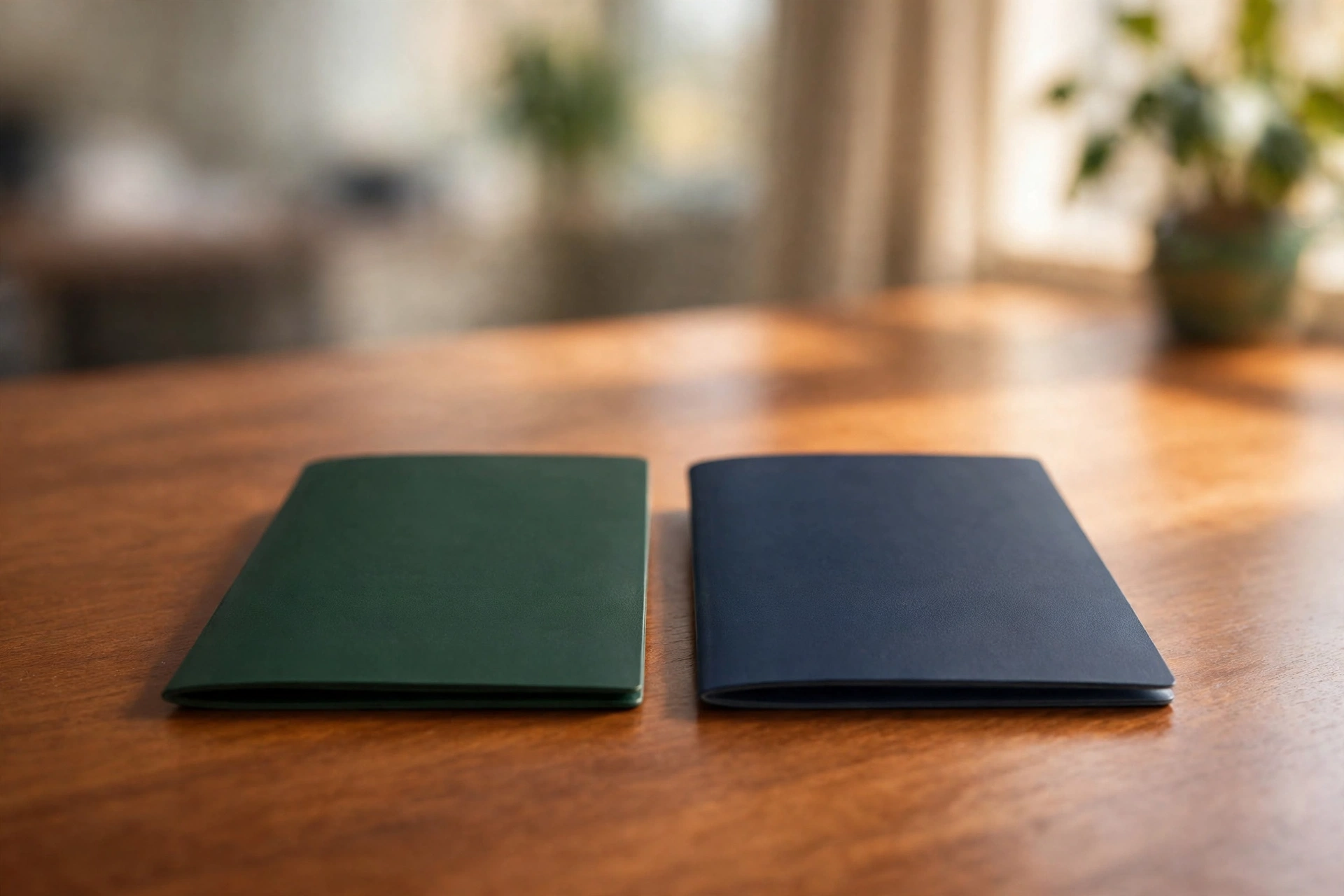
A regular blue passport is for any US citizen and any trip, while a diplomatic passport is tied to a government role and official duties only. The sources point to four differences.
First, the cover: blue for regular books and black for diplomatic ones, per LegalClarity and PhotoAid. Second, who can hold it: any citizen can apply for a regular passport, but a diplomatic passport needs an employing agency and a qualifying role. Third, validity: LegalClarity gives 10 years for a standard adult passport and up to five years for diplomatic and official ones. Fourth, purpose: a regular passport covers tourism, family trips and work travel, while a diplomatic passport cannot be used for personal trips. Cost also differs, because PhotoAid says the diplomatic passport is free, while a regular one carries fees. Many holders carry both. Our passport card vs book guide explains the other regular formats, and our passport renewal guide explains how a regular book is renewed.
Can You Buy a Diplomatic Passport?
No. A real diplomatic passport is assigned, not bought. Newstrail says anyone offering to sell one is almost certainly running a scam.
PhotoAid says the passport is free and tied to an official government role, so it is not available to the general public. LegalClarity says you cannot buy a diplomatic passport. Newstrail describes common scams: sellers promise immunity, protection or access to hidden government channels, use polished websites, copied seals, fake letterhead and fake consultants, and frame secrecy as proof of authenticity. It cites an AP report of a man in India who allegedly posed as an ambassador and ran a bogus embassy near New Delhi. It adds that victims who believe in fake diplomatic status can be steered into other frauds such as fake jobs or shell-company schemes.
How Do You Spot a Diplomatic Passport Scam?
No service can sell a diplomatic passport, immunity or access to hidden channels. Be careful with offers.
Be careful when a website or agent:
- Sells a black passport or diplomatic status for a fee.
- Promises immunity or protection from arrest.
- Uses copied seals, fake letterhead or secrecy as proof.
- Claims to be an embassy or consul without an official address.
- Asks for payment to a personal account.
Use official government sites, and report scams to the authorities.
What Mistakes Cause Problems?
Believing in shortcuts, using the passport for personal trips and ignoring return rules cause most problems. Check each point first.
- Paying for a diplomatic passport or status.
- Assuming the passport gives immunity.
- Using it for a vacation.
- Keeping it after the role ends.
- Assuming visa-free entry is guaranteed.
- Mixing up diplomatic and official passports.
- Believing a black cover always means diplomatic status.
- Trusting a seller with fake letterhead.
When unsure, ask the employing agency or the State Department.
FAQs
What is a diplomatic passport?
A black US passport for official diplomatic travel, issued through an employing agency.
Who can get a diplomatic passport?
Diplomats, certain officials and some contractors with a qualifying role, plus authorized family.
Can I buy a diplomatic passport?
No. It is assigned, and sellers are almost certainly scammers.
Does a diplomatic passport give immunity?
No. Immunity depends on international law and the holder’s recognized status.
Can I use it for vacation?
No. Use a regular blue passport for personal travel.
How long does it last?
Typically five years or until the status ends, whichever comes first.
Conclusion
A diplomatic passport is a black passport for officials with diplomatic status, issued through an employing agency and valid only for official business. It lasts up to five years or until the role ends, family members get one only with authorization, and it does not provide immunity on its own. You cannot apply for one yourself or buy one, so treat any offer as a scam. Use a regular blue passport for personal trips and check details with the State Department.