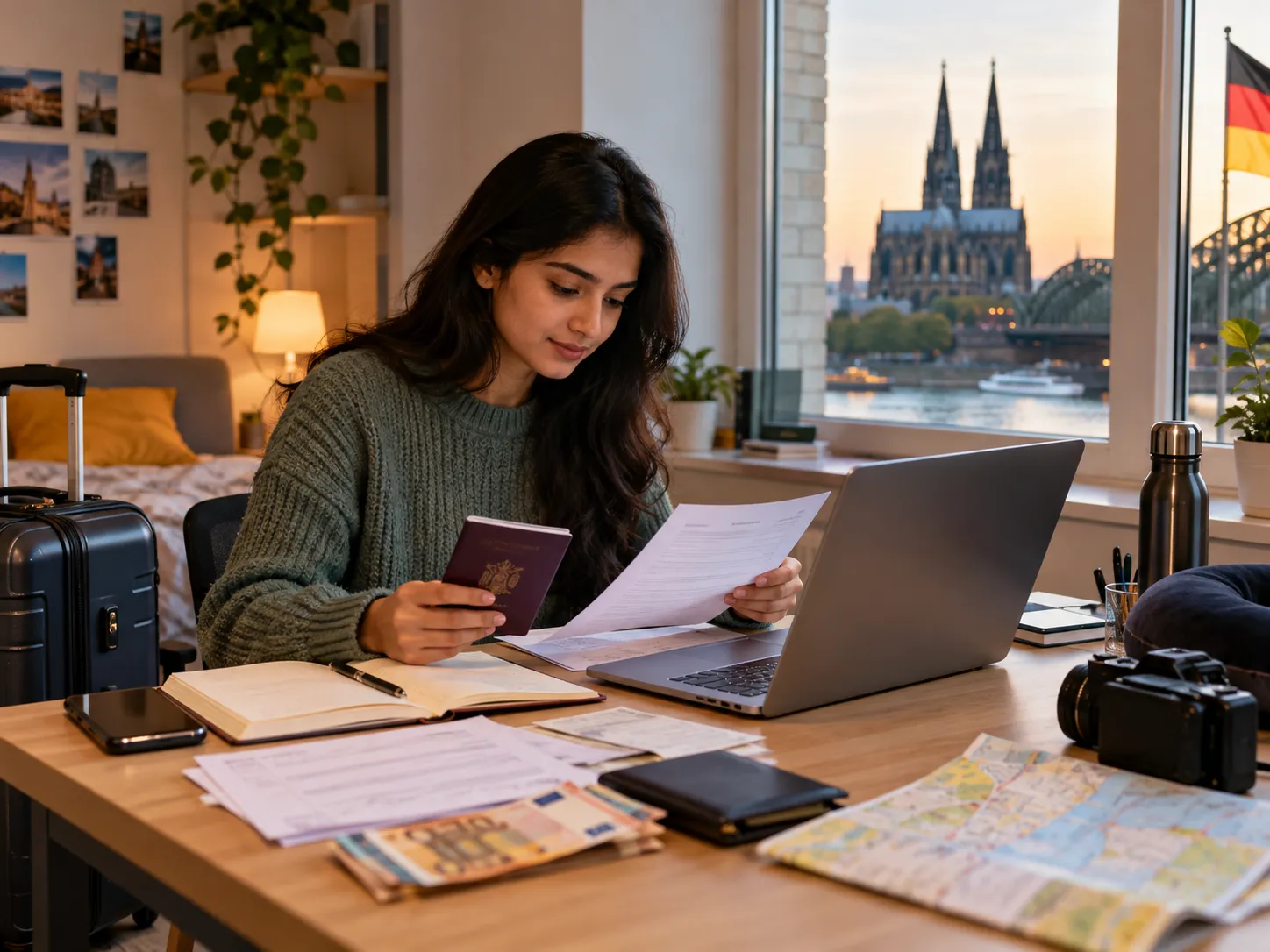
A Germany passport costs €70 for applicants aged 24 and over and €37.50 for younger applicants, and it is valid for 10 years or 6 years respectively. Only German citizens can hold it, and foreign nationals reach it through naturalization after five years of legal residence, B1 German and a settlement permit.
This guide covers who can get a Germany passport, how naturalization works, what the passport costs, how to apply, how long it takes and how strong the passport is for travel. Facts come from German city administration pages, the naturalization service description of a German municipality and press reports on the 2026 Henley Passport Index, and they were checked in October 2026. Fees and waiting times differ by city, so confirm the final figures with your local citizens’ office (Bürgeramt).
Who Can Get a Germany Passport?
Only German citizens can get a Germany passport. A person becomes a citizen by birth to a German parent or by naturalization. A residence permit, even a permanent one, does not give a Germany passport.
Foreign nationals who live in Germany first need a settlement permit, which our Germany PR guide explains, and then apply for naturalization. Students and workers who plan this route usually start with a degree or a job, as our guide to Study in Germany and our Germany work visa guide describe.
What Are the Naturalization Requirements?
Naturalization needs five years of legal residence, B1 German, a secure income, a clean record and a permanent residence right. A municipal service page lists the conditions:
- Residence: Five years of legal stay in Germany, which special integration achievements and German at C1 level can shorten
- Language: German at B1 level or higher, with exemptions for illness, disability or age
- Loyalty: Support for the free democratic basic order and a signed loyalty declaration, plus acknowledgment of Germany’s special historical responsibility
- Livelihood: The ability to support yourself and your dependents without certain public benefits
- Criminal record: No legally binding conviction, and pending proceedings suspend the process
- Residence status: A permanent residence right, such as a settlement permit, because a study permit does not qualify
- Civic knowledge: The naturalization test or the Living in Germany integration course certificate, with exemptions for some applicants
Germany removed the three-year fast track in October 2025, so the five-year rule now applies to everyone who naturalizes based on residence. The Rodgau naturalization page shows the conditions in one list.
How Much Does Naturalization Cost?
The administrative fee is €255 per adult and €51 for a minor child who naturalizes with a parent. Certificates, translations and certifications can add to the cost, and foreign bank transfers may carry fees. Authorities can reduce or waive the fee for reasons of equity or public interest.
The application needs the following documents:
- The application form and a valid passport or photo ID
- A valid residence permit
- Civil status documents, such as birth and marriage certificates, with translations or apostilles where needed
- Certificates of qualifications obtained in Germany
- Proof of employment, income, pension or self-employment
- The rental agreement and proof of health insurance
- Proof of retirement provision
- Proof of German at B1 level or higher
- Proof of civic knowledge
The municipal page states no processing time, so contact your own authority for the current wait. Rejections carry a fee, and you can file an objection or sue before the administrative court.
How Much Does a Germany Passport Cost?
A new Germany passport costs €70 for applicants aged 24 and over and €37.50 for applicants under 24. The table shows the fee and the optional extras listed by the city of Bremen.
| Item | Fee or rule |
| Passport, age 24 and over | €70, valid 10 years |
| Passport, under 24 | €37.50, valid 6 years |
| Express processing | €32 extra |
| 48-page passport | €22 extra |
| Delivery to your home | €15 extra |
| Photo at the office | €6, unless you bring a QR code from a photographer |
Temporary passports are valid for up to one year. Other cities may add small local charges, so check your own authority’s price list.
How Do You Apply for a Germany Passport?
Apply in person at the citizens’ office responsible for your main residence. The city of Bremen lists the process, and other cities follow a similar pattern. Six steps cover it:
- Check that you hold German citizenship.
- Book an appointment at your local office.
- Bring proof of identity, such as an identity card or an old passport.
- Bring a digital photo QR code from the photographer, or have the photo taken at the office.
- Bring the registry office document if your name has changed.
- Give two fingerprints, pay the fee and collect the passport when it is ready.
The office stores the two fingerprints only on the passport’s chip. Arrive about 15 minutes before the appointment, because offices check documents at the desk.
How Long Does a Germany Passport Take?
Standard processing takes about 6 to 8 weeks, and express processing takes about 4 to 5 days. These figures come from the city of Bremen, and times differ between cities and seasons. The express fee is €32 on top of the passport price.
Apply well before a trip. A traveler who plans a summer holiday should apply in spring, because an appointment slot or a printing delay can stretch the wait.
How Strong Is the Germany Passport?
The Germany passport gave visa-free access to 185 destinations in the 2026 Henley Passport Index, down from 192 in 2025. The Local reports that Germany placed fourth in the January 2026 ranking. The report attributes the drop to small changes in visa rules in several countries, mainly in Africa and the Middle East, and not to a German policy change.
The passport remains one of the strongest in the world. As an EU citizen, a German passport holder can live and work in other EU countries without a work permit. Rankings change every year, so check the current index before you rely on a number.
For Pakistani and Indian applicants, the passport changes the visa picture completely. A Germany passport removes the need for the Schengen visas explained in our Germany visit visa guide and the permits in our other Germany guides. The Visa Cost Calculator shows what other visas cost for comparison.
Can You Keep Your Old Passport?
Germany tolerates dual citizenship in general, but your home country decides whether you may keep its passport. Check the law of your home country before you start the application, because some countries cancel citizenship when you naturalize elsewhere. Ask your embassy for the written rule and keep a copy with your file.
What Is the Civic Knowledge Test?
The civic knowledge requirement is met by the naturalization test or by the certificate of the Living in Germany integration course. Both show that you know the legal system, society and living conditions in Germany. Some applicants are exempt: those with an illness, disability or age that prevents the test, those with a German school, college or university qualification and some long-term residents who arrived as guest or contract workers before the cut-off dates of 30 June 1974 and 2 October 1990, including accompanying spouses.
Graduates of German universities therefore skip the test, which is another reason the study route works well for the passport. Ask your authority which certificate it accepts and book the test early, since the certificate is a required document.
What About Children and Families?
A minor child who naturalizes together with a parent pays €51 instead of €255, and children under 16 need only age-appropriate German. The file for a minor adds proof of custody and the consent of the other parent when custody is shared. Spouses apply for themselves and meet the same conditions as any adult, including the B1 language level.
A child who becomes a German citizen can then apply for a Germany passport at the age-based fee. A passport for a child under 24 costs €37.50 and is valid for six years. Our Germany family visa guide explains how the family arrives in Germany before any of these steps begin.
How Do You Plan the Route From Student to Passport Holder?
Plan the route in five stages, and expect the whole path to take several years. The stages below follow the rules in this guide and in our other Germany guides:
- Study in Germany on a student visa, as our Germany student visa guide explains.
- Switch to a permit for qualified work after the degree.
- Reach the settlement permit, which German graduates can apply for after two years with pension contributions.
- Complete five years of legal residence and reach B1 German.
- Apply for naturalization, then apply for the passport after you receive the certificate.
Ask your authority how it counts the years you spent on a student permit, because counting rules differ by case. Keep every permit, contract and salary slip from the first day.
How Do You Renew a Germany Passport?
Renewal follows the same steps as a new application: book an appointment, bring the old passport, a photo and the fee. The old passport serves as proof of identity. A new passport is valid for 10 years for applicants aged 24 and over, so most adults renew once a decade. Start the renewal several months before the expiry date, because many countries require a passport that stays valid for months after your arrival.
Does the Passport Remove Every Visa?
No, a Germany passport removes many visa requirements but not all of them. The index counts 185 destinations that allow visa-free entry. The rest still ask for a visa, an electronic authorization or an advance permit, and the rules change often, as the drop from 192 to 185 destinations shows.
Check the entry rules of the destination country on its official site or with its embassy before you book flights. Passport holders need to watch the validity rules, because many countries ask for a passport that stays valid for several months after arrival and a few ask for blank pages.
Which Mistakes Delay a Germany Passport?
Applying without a settlement permit is the most common mistake on the naturalization route. Four more mistakes follow:
- Applying for naturalization on a study permit
- Missing the B1 certificate or the civic knowledge proof
- Leaving out the apostille or translation on civil documents
- Booking a trip before the passport is ready
Check the list of documents with your local authority before you book the naturalization appointment, because each city adds its own requests.
FAQs
How much is a Germany passport?
€70 for applicants aged 24 and over and €37.50 for applicants under 24. Express processing adds €32.
How long is a Germany passport valid?
Ten years for applicants aged 24 and over, and six years for applicants under 24.
Who can apply for a Germany passport?
Only German citizens. Foreign nationals first need naturalization, which requires five years of legal residence and B1 German.
Can a permanent resident get a Germany passport?
Not directly. A settlement permit is a residence right, and citizenship needs a separate naturalization application.
How long does a Germany passport take?
About 6 to 8 weeks for standard processing and about 4 to 5 days for express in Bremen. Other cities differ.
How many countries can I visit with a Germany passport?
185 destinations visa-free in the 2026 Henley Passport Index, down from 192 in 2025.
Do I need to give fingerprints?
Yes. Two fingerprints are taken for a new passport and stored only on the chip.
How much does naturalization cost?
€255 per adult and €51 for a minor child naturalized with a parent.
Conclusion
A Germany passport costs €70 for adults aged 24 and over and is valid for 10 years. A foreign national gets it only after naturalization, which needs five years of legal residence, B1 German, a secure income and a permanent residence right such as the settlement permit.