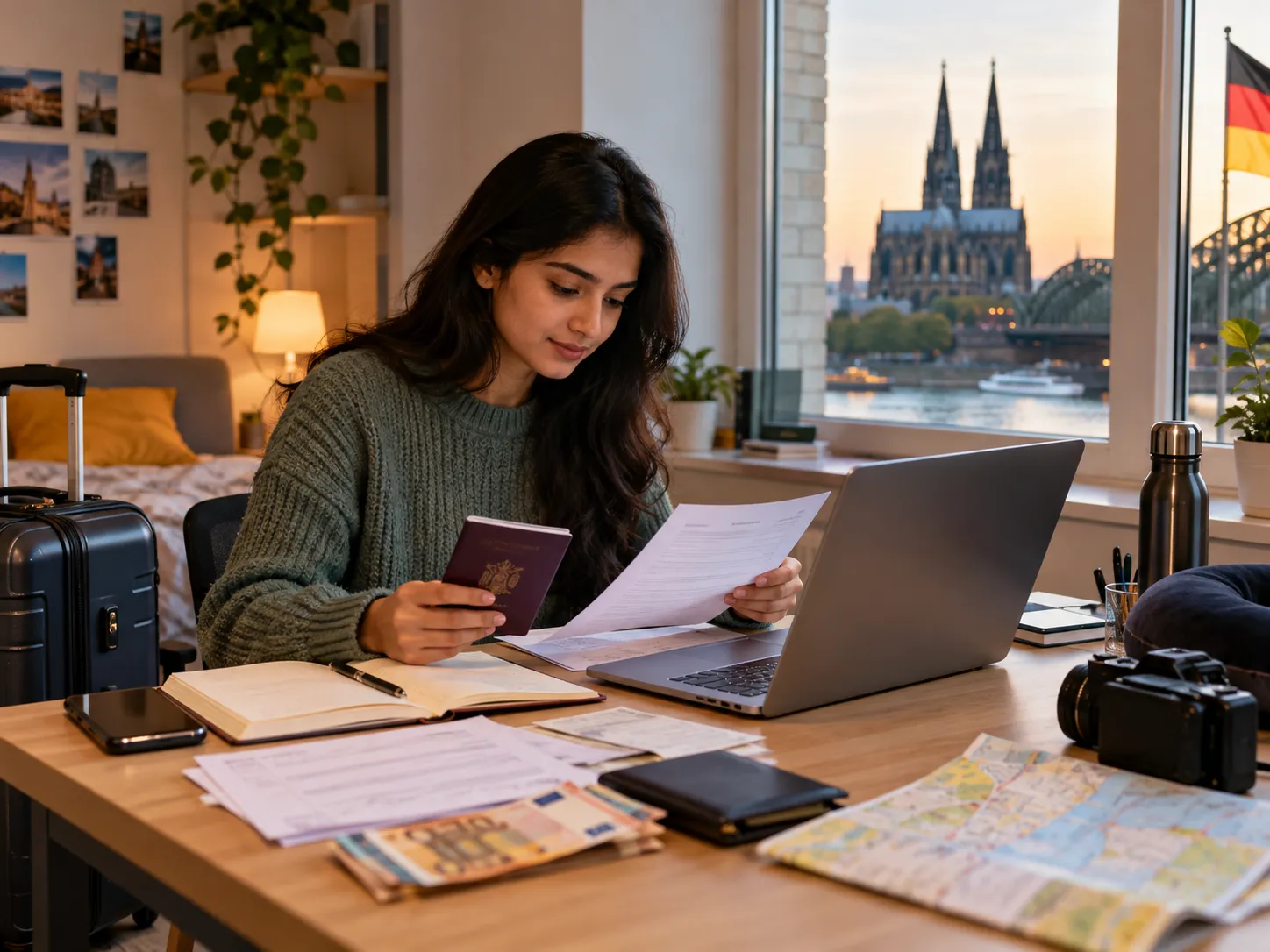
A Germany family visa is a national long-stay visa for the spouse or minor children of a person who lives in Germany, and the fee is €75 for adults and €37.50 for children aged 0 to 17. Spouses usually need German at A1 level, a sponsor with a valid residence permit, enough income to cover the family without public benefits and housing in Germany.
This guide explains who can join a family member, which sponsors qualify, how the A1 rule works, what the German Embassy in Pakistan asks for, how to apply and how to avoid the common delays. Facts come from the Federal Foreign Office, the German Embassy in Pakistan and Make it in Germany, and they were checked in October 2026. Rules differ by sponsor type and by mission, so confirm the final checklist with the mission that handles your file.
Who Can Get a Germany Family Visa?
Spouses and minor children of a person with a residence permit in Germany can apply for family reunification. The German Embassy in Pakistan handles four main categories: joining a family member in Germany, joining an EU citizen who lives in Germany under freedom of movement rules, joining a recognized refugee and marrying in Germany.
The sponsor’s permit decides the details. A sponsor with a student permit, an EU Blue Card or a skilled worker permit can usually bring a spouse and children, but each permit has its own conditions. A short-term Schengen visit does not qualify the visitor as a sponsor. Our Germany visit visa guide covers the short-stay route, which is a separate visa.
Which Sponsor Types Qualify?
The sponsor’s status sets the language rule and the main condition. The table compares the common cases.
| Sponsor | Spouse language rule | Main condition |
| International student | German A1 required | Marriage existed before the permit and the stay lasts longer than one year |
| EU Blue Card holder | Exempt from A1 | Valid Blue Card and enough income and housing |
| Skilled worker | Check with the mission | Valid permit, income and housing |
| German or EU citizen | Exemptions apply in some cases | No visa fee when joining a German or EU national |
Each case needs a valid passport, a marriage certificate, health insurance and proof that the sponsor can support the family.
Can International Students Bring a Spouse and Children?
Yes, but only under conditions. The Federal Foreign Office FAQ states that family reunification for students is usually considered only if the student holds a residence permit, the marriage existed when that permit was granted and the stay will last longer than one year. The student must support the family without public benefits.
Students on short exchange stays rarely meet the one-year condition. Students on a full degree program usually do. A student who plans to marry after arriving in Germany follows a different path, because the marriage did not exist when the permit was granted.
Income is the hard part for most students. A blocked account of €11,904 covers one person for the first year, and family members raise the amount you must show, so ask the foreigners authority for the exact figure. Our guides to studying in Germany from Pakistan and the blocked account in Germany explain the student budget, and the pillar guide on Study in Germany shows where the family option fits in the full plan.
Can Work Visa Holders Bring Their Family?
Yes, holders of the EU Blue Card and the skilled worker permit can bring a spouse and minor children. Make it in Germany states that Blue Card holders may live in Germany with their families. The spouse of a Blue Card holder is exempt from the A1 requirement.
The sponsor needs a permit that is valid long enough, a work contract that supports the whole family and housing in Germany. Our Germany work visa guide explains the permits and salary thresholds that decide whether a family can join.
What Is the A1 German Rule for Spouses?
Spouses generally need a German A1 certificate that is no older than one year at the time of application. The German Embassy in Pakistan lists exemptions for spouses of certain refugees, EU Blue Card holders, spouses of non-German EU nationals and parents of minor German children.
Accepted A1 providers include the Goethe-Institut, ÖSD, telc and TestDaF. A1 is the first level of the European framework, and it covers basic phrases for daily life. Book the exam early, because the certificate must still be valid on the day you submit the file.
Children follow a different rule. Applicants aged 16 or 17 need C1 German, with exemptions for some children, and the Pakistan page says only the Goethe-Institut issues valid C1 certificates in Pakistan. The embassy page names no language rule for younger children.
Which Documents Does the German Embassy in Pakistan Ask For?
The embassy asks for the application form, photos, the sponsor’s residence proof, civil documents and insurance. The list below follows the Pakistan embassy checklist, abridged:
- Application form: One Videx form per applicant, with biometric photos
- Sponsor’s registration: A Meldebescheinigung (registration certificate) no older than six months
- Sponsor’s permit: A copy of the sponsor’s residence permit
- Passports and ID: Current and previous passports, plus CNIC copies
- Civil documents: Original NADRA birth certificates, the Nikah Nama in Urdu with an English translation and the NADRA marriage certificate
- Marriage history: Proof of earlier marriages, where they apply
- Insurance: Travel insurance valid for one year from the application date
- Relationship proof: Extra evidence of the relationship, the appointment email and the applicant’s declaration
The mission may ask for more documents. The mission can request a verification fee for document checks, which the embassy page puts at 75,000 PKR, rising to 79,000 PKR for applications after 1 September 2026. Obtain time-sensitive documents only after your appointment is confirmed, because waits are long and old certificates expire.
How Do You Apply for a Germany Family Visa?
The Islamabad Embassy accepts applications only through the Consular Services Portal from 15 January 2026, and the appointment waiting list has been discontinued. Applicants who live in Sindh or Balochistan book through the Consulate General in Karachi. The full procedure runs in seven steps:
- Confirm the sponsor’s permit type and the family members who can apply.
- Book the A1 exam for the spouse, if the A1 rule applies.
- Collect the civil documents and the sponsor’s documents from Germany.
- Complete the Videx form and submit the application on the portal.
- Wait for the review. If the file is in order, you receive a link to book an appointment.
- Attend the appointment with originals, give biometrics and pay the fee.
- Wait for the decision and collect the passport with the visa.
The passport you plan to travel on stays at the mission during processing. The embassy page gives no fixed processing time, so plan for a long wait and avoid booking flights before the decision.
How Much Does a Germany Family Visa Cost?
The visa fee is €75 for adults and €37.50 for children aged 0 to 17, payable in Pakistani rupees at the embassy. No visa fee applies when you join a German or EU national.
Other costs add up around the fee:
- The A1 exam and course
- Translation of the Nikah Nama and other documents
- Travel insurance for one year
- Flights to Germany
- The verification fee, when the mission requests it
The Visa Cost Calculator helps you total these items before you apply.
What Happens After You Arrive in Germany?
The family member registers the address, then converts the entry visa into a residence permit at the local foreigners authority. Bring the visa, passports, marriage certificate, insurance proof, housing contract and the sponsor’s documents. Family residence permits usually allow work, and the permit states the exact rule, so read it before you start a job.
A spouse who arrives without German should start a course at once. Learning German helps with the foreigners authority, daily life and later extensions.
What If You Join an EU Citizen or Marry in Germany?
Two special cases have their own document lists on the Pakistan embassy page. A person who joins an EU citizen living in Germany under freedom of movement rules submits an expanded Meldebescheinigung and the sponsor’s employment contract. If the sponsor is not a spouse or a parent, the file adds proof of alimony payments over the last two years.
A person who plans to marry in Germany submits the marriage-date confirmation from the registry office (Standesamt) and a Verpflichtungserklärung from the German foreigners authority. Both cases follow the same appointment steps as the standard route, and the embassy page lists which documents drop out of the standard set.
How Should You Plan the Timeline?
Start with the sponsor’s side, because documents from Germany take the longest. The Meldebescheinigung, the permit copy and the income proof come from the sponsor, and some expire after six months. Collect them in the same month as your appointment.
A realistic order is: confirm the permit type, book the A1 exam, request the Nikah Nama translation, gather the NADRA certificates and file on the portal. Keep a folder with two copies of every page and one digital scan. The mission can ask for extra proof of the relationship at any point, so keep photos, chat history and travel records ready.
What Happens If the Application Is Refused?
The refusal letter explains the reasons and states the deadlines and options for a response. Read it first, then compare each reason with your file. Typical reasons are missing civil documents, an expired A1 certificate, doubts about the relationship or income that does not cover the family.
Fix the gap and reapply with a corrected file when the reason is a missing document. When you disagree with the decision, the letter names the steps for an objection, and the deadline is short, so act in the first days. A sponsor in Germany can ask the foreigners authority to support the case with a written statement.
Which Mistakes Delay a Germany Family Visa?
Old documents and a missing A1 certificate cause most delays. Four others follow:
- Applying with a Meldebescheinigung older than six months
- Sending a Nikah Nama without a certified English translation
- Booking a flight before the visa decision
- Assuming one sponsor type has the same rules as another
Check the validity date on every document the day before the appointment.
FAQs
How much is the Germany family visa fee?
The fee is €75 for adults and €37.50 for children aged 0 to 17. No fee applies when joining a German or EU national.
Do I need German to join my spouse in Germany?
Usually yes. Spouses need A1, with exemptions for Blue Card holders’ spouses and some other groups.
Can an international student bring a family?
Yes, if the student holds a residence permit, the marriage existed when it was granted, the stay lasts over a year and the family can live without public benefits.
How old can the A1 certificate be?
It must be no older than one year when you submit the application, according to the German Embassy in Pakistan.
Where do Pakistani applicants apply?
Through the Consular Services Portal for Islamabad. Residents of Sindh and Balochistan book at the Consulate General in Karachi.
Can my children join me?
Yes. Minor children can apply, and applicants aged 16 or 17 need C1 German unless an exemption applies.
Can my spouse work in Germany?
Family residence permits usually allow work. The permit shows the exact rule, so confirm it at the foreigners authority.
How long does the application take?
The embassy gives no fixed time. Plan for several months, and do not book flights before the decision.
Conclusion
A Germany family visa needs a sponsor with a valid residence permit, an A1 certificate for the spouse unless an exemption applies, proof of income and housing, and the full civil document set. The fee is €75 for adults and €37.50 for children, and the Islamabad Embassy accepts applications only through the Consular Services Portal.